
What Is a Diamond?

A diamond is a gemstone made of pure carbon arranged in a crystal form. It is the hardest natural mineral on Earth, loved for its brilliance, sparkle and strength.
Key Physical Traits
⦁ Hardness: 10/10 on the Mohs scale — most scratch-resistant natural stone.
⦁ Composition: Carbon atoms in a cubic lattice.
⦁ Luster/ Sparkle: Exceptional light reflection and dispersion gives diamonds their famous fire.
⦁ Colors: Usually colorless to light yellow/brown; rarer diamonds show fancy colors (blue, pink, green).
Cultural Importance:
Diamonds symbolize eternal love, strength, wealth, and commitment — making them the top choice for engagement rings and luxury jewelry.
💎 Most Used Diamond Jewelry Patterns
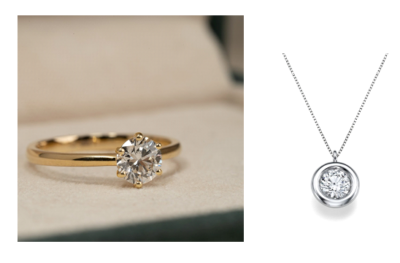

Style
One single diamond, center-focused.
Common uses
⦁ Pendants
⦁ Rings
⦁ Stud earrings
Why popular
⦁ Maximum brilliance
⦁ Premium look
⦁ Lowest making cost
⦁ Easy to upgrade
Business tip
👉 Best profit margin + fastest selling design
2 Halo Setting (big look, smart budget)


Style
Center diamond + small diamonds around it
Why customers love it
⦁ Looks 30–50% bigger
⦁ Extra sparkle
⦁ More luxurious appearance
Common uses
⦁ Bridal necklaces
⦁ Engagement rings
⦁ Statement pendants
Business tip
👉 Use 0.70–0.90 ct center → looks like 1.5 ct
3 Tennis / Line Necklace (luxury classic)

Style
Continuous row of equal diamonds
Look
Clean, rich, royal
Common uses
⦁ Necklaces
⦁ Bracelets
Market
⦁ Bridal
⦁ Luxury buyers
⦁ Investment jewelry
Business tip
👉 Easy to calculate pricing (carat × price per carat)
4️⃣ Pavé / Micro-set (maximum sparkle)


Style
Many small diamonds closely set
Effect
“Fully glittering” surface
Common uses
⦁ Chokers
⦁ Bangles
⦁ Earrings
⦁ Fashion pieces
Business tip
👉 Uses small melee stones → high margin
5️⃣ Cluster / Floral (bridal & traditional favorite)

Style
Multiple stones arranged like flower/sunburst
Popular in
⦁ Pakistan
⦁ India
⦁ Middle East bridal sets
Why loved
⦁ Big appearance
⦁ Regal design
⦁ Traditional look
Business tip
👉 Perfect for wedding season sales

What Is Ruby?
A ruby is one of the most valued and famous precious gemstones in the world. It is a red variety of corundum (aluminum oxide), colored by trace amounts of chromium.
⦁ Color: Ranges from pinkishred to deep “bloodred.”
⦁ Hardness: 9 on the Mohs scale (very durable, second only to diamond).
⦁ Symbolism: Passion, love, courage, and power.
⦁ Birthstone: July.
Topquality rubies with vivid red color — especially the rare “pigeon’s blood red” — are the most prized and can be more valuable than many diamonds.
❤️ Ruby Pricing Matrix (Wholesale Guide)
Natural Heated Ruby (USD per carat)
1–2 Carat Stones
Color ↓ / Clarity → Eye Clean Slight Included
Pigeon Blood $20k–80k+ $12k–25k $6k–10k
Vivid Red $8k–20k $5k–10k $2k–4k
Medium Red $2k–6k $1k–3k $500–1k
Pinkish $300–1k $150–500 $50–200
Treatment Adjustments
Multiply base price by:
Type Multiplier
Unheated ×1.5–2
Heated ×1
Glass-filled ×0.1–0.2
Patterns Used in Ruby Jewelry

What Is Emerald?

Emerald is a beautiful green gemstone, the green variety of the mineral beryl (same family as aquamarine) and is prized for its deep lush color and rarity. The green color comes from trace amounts of chromium and vanadium. It’s traditionally the birthstone of May and symbolizes renewal, love, wisdom, and prosperity.
Key Properties
⦁ Mineral: Beryl (green variety)
⦁ Color: Bluishgreen to deep green — vivid, rich green is most prized.
⦁ Hardness (Mohs): ~7.5–8 (less hard than ruby/diamond, so handle carefully)
⦁ Clarity: Usually has natural inclusions called jardin (“garden”), which are accepted as part of the gem’s character.
Emerald inclusions are common — completely eyeclean emeralds are rare and very valuable.
🌍 Origin & Variations
Emerald is mined in several countries, each with slightly different qualities:
⦁ Colombia: World’s most famous source — fine vivid green and higher prices.
⦁ Zambia: Often slightly bluishgreen and good value.
⦁ Brazil, Pakistan & Afghanistan: Also produce good stones but with varied quality and pricing.
💰 Emerald Price Guide (Approximate)
Price per carat varies widely by colour, clarity, treatment, and origin:
Quality Level General Price Range (per carat)
Low (commercial) ~₹800 – ₹2,000 / ~PKR 800 – 3,000
Medium quality ~₹2,500 – ₹10,000 / ~PKR 3,000 – 15,000
High quality (vivid color, good clarity) ~₹12,000 – ₹50,000 / ~PKR 20,000 – 80,000
Premium / investment grade ₹50,000 – ₹100,000+ / PKR 80,000 – 150,000+
What Is Sapphire?

Sapphire is a precious gemstone, a variety of the mineral corundum (aluminum oxide), best known for its rich blue color — though it naturally comes in many colors including yellow, pink, green, orange, white, and more.
🧠 Key Properties
⦁ Mineral: Corundum (same family as rubies).
⦁ Color: Most famous in deep blue, but also found in yellow, pink, green, orange, white, colourchange, and more.
⦁ Hardness: ✨ 9 on Mohs scale (very durable and suitable for everyday jewelry).
⦁ Luster: Glasslike (vitreous).
⦁ Birthstone: September.
💡 Blue sapphire symbolizes wisdom, royalty, and protection. Fancy colors each have their own traditional meanings.
📍 Common Types of Sapphires
⦁ Blue Sapphire – Most classic and valued type.
⦁ Padparadscha Sapphire – Rare and highly prized orange-pink variety.
⦁ Yellow Sapphire (Neelam/Pukhraj) – Popular in jewelry and astrology.
⦁ Pink, Green, White, Star & ColorChange Sapphires – Other attractive varieties
💰 Sapphire Price Guide (Approximate)
Prices vary greatly based on color, clarity, origin, treatment, and carat weight:
🌍 International Market (USD per Carat)
Type / Quality Approx. Price Range (per carat)
Commercial Blue $50 – $500
Good Quality Natural Blue $300 – $1,000
Fine Untreated Blue (Ceylon/Burmese) $1,000 – $5,000+
Kashmir / Premium Blue $10,000+
Padparadscha $1,500 – $15,000+
Fancy Colors (Pink, Yellow, Green) $100 – $2,000+
Star Sapphire $100 – $3,000+
🇵🇰 Prices in Pakistan (Approx.)
⦁ Small to Medium Natural Blue Sapphire: ~PKR 2,000 – PKR 70,000+ (for 2–5 ct stones).
⦁ Smaller and Commercial Pieces: ~PKR 1,000 – PKR 20,000+ depending on treatment and size.
⦁ Yellow Sapphire (per carat): ~PKR 12,000 (5 ct shown as example).
💡 Note: Untreated sapphires with excellent color and clarity — especially from famous origins (Sri Lanka/Ceylon, Myanmar, Kashmir) — can command premium prices.
What Is Topaz?

Topaz is a beautiful semiprecious gemstone known for its clarity, vibrant colors, and brilliance. It belongs to the mineral family of silicates and comes in a variety of colors including blue, yellow, pink, golden/imperial, and colorless. Topaz is widely used in jewelry like rings, pendants, and bracelets because of its attractive look and good durability.
🧠 Key Properties
⦁ Hardness: ~8 on the Mohs scale — strong and suitable for regular wear.
⦁ Luster: Vitreous (brilliant, glasslike shine).
⦁ Birthstone:December (commonly used as one of the birthstones).
⦁ Colors:
⦁ Blue Topaz: Light blue, Swiss blue, London blue
⦁ Yellow Topaz: Golden or amber yellow
⦁ Imperial Topaz: Goldenorange to pinkish orange (most valuable)
⦁ Pink Topaz: Soft to vivid pink tones
⦁ Colorless Topaz: Often used as diamond simulant
💰 Topaz Price Guide
Prices vary widely depending on color, size, clarity, treatment, and rarity.
🌍 International Approx Prices (USD per carat)
Type of Topaz Approx Price Range
Common Blue (treated) $10 – $50 per ct
Natural Blue (rare) $60 – $200 per ct
Yellow Topaz $20 – $100 per ct
Pink Topaz $100 – $600 per ct
Imperial Topaz $500 – $2,500+ per ct
Top quality Imperial and rare colors can exceed these depending on clarity and size.
🇵🇰 Approx Prices in Pakistan (PKR per carat)
Type Price Range (PKR per carat)
White Topaz ~₨ 1,500 – ₨ 5,000
Blue Topaz ~₨ 2,000 – ₨ 15,000
Yellow Topaz ~₨ 3,000 – ₨ 15,000
Pink Topaz ~₨ 10,000 – ₨ 50,000
Imperial / Golden Topaz ~₨ 10,000 – ₨ 100,000+
(Ranges depend on quality, cut & certification.)
What Is Opal?

Opal is a unique and beautiful gemstone prized for its vibrant “playofcolor” — a dazzling phenomenon where flashes of colours appear and move as the stone is turned in light. The more intense and varied the colour play, the more valuable the opal.
🧠 Key Properties
⦁ Mineral type: Hydrated silica (distinctive for colour play).
⦁ Hardness: ~5.5–6.5 on Mohs scale — softer than many other gemstones, so handle with care.
⦁ Luster: Vitreous to resinous (shiny surface).
⦁ Birthstone: October (often used as one).
⦁ Symbolism: Creativity, emotional balance, imagination, and love.
📌 Common Types of Opal
Type of Opal Appearance Typical Value
Black Opal Dark body tone with vivid, highcontrast colour play Most valuable of all opals.
White/Light Opal Light body colour with soft to moderate playofcolor More common and affordable.
Crystal Opal Transparent or semitransparent with floating colour flashes Very desirable.
Fire Opal Warm orange/red/yellow tones with occasional playofcolor Striking and popular.
Boulder Opal Opal veins in ironstone with natural contrast Attractive natural look.
Matrix / Other Varieties Patterns & opal in host rock More budgetfriendly.
What Is Pearl?
A pearl (called Moti in Urdu/Hindi) is an organic gemstone formed inside the shell of an oyster or mussel. Unlike most gems (which are minerals), pearls are made from layers of calcium carbonate and conchiolin secreted by the mollusk around an irritant.

🌟 Key Properties
⦁ Material: Calcium carbonate + conchiolin (organic)
⦁ Hardness: ~4.5–5.5 on Mohs scale (softer than most gemstones)
⦁ Luster: Iridescent “orient” sheen unique to pearls.
⦁ Birthstone:June (but often used in astrology for Moon energy).
⦁ Shape: Round is most valuable, followed by nearround, button, and baroque (irregular).
Pearls have been treasured for centuries for their classic beauty and symbolic meaning — purity, wisdom, calmness, and elegance.
📌 Types of Pearls
1) Freshwater Pearls
• Grown in lakes and rivers (often China).
• Affordable, many shapes& colors.
• Good choice for everyday jewelry.
2) Akoya Pearls
• Classic white/cream pearls with high lustre.
• Popular in necklaces and earrings.
3) South Sea Pearls
• Large, luminous pearls from Australia/Philippines.
• Can be white, silver, or golden.
4) Tahitian Pearls (Black Pearls)
• Exotic dark pearls with metallic overtones.
• Highly prized for unique colors.
5) Baroque & Other Shapes
• Irregular shapes; artistic but less expensive than perfectly round.
6) Natural vs Cultured
• Natural pearls form without human aid — very rare and expensive.
• Cultured pearls are farmed and much more common.

What Is Amethyst?
Amethyst is a purple gemstone — a variety of quartz known for its rich violet color. It’s one of the most popular semiprecious gemstones used in jewelry and spiritual healing.
🧠 Key Properties
⦁ Mineral: Quartz (purple variety)
⦁ Color: Ranges from light lilac to deep royal purple
⦁ Hardness:7 on the Mohs scale — good durability for regular wear
⦁ Luster: Vitreous (shiny, glasslike)
⦁ Birthstone:February (alternative) — associated with calm, clarity, and spiritual balance
Amethyst is often used in rings, pendants, earrings, and bracelets for both fashion and metaphysical purposes.
💰 Amethyst Price Guide
🇵🇰 Prices in Pakistan (Approx.)
Prices vary widely based on size (carat), color intensity, clarity, and origin:
Weight / Quality Approx Price (PKR)
2–3 ct (commercial) ~₨ 600 – ₨ 2,200
4–5 ct (good quality) ~₨ 1,800 – ₨ 7,500
8+ ct (premium) ~₨ 10,000 – ₨ 35,000+
Single pieces listed online (5–13 ct) ~₨ 6,000 – ₨ 15,000+ per stone
Lab certified stones (3.9–4.5 ct) ~₨ 8,900 – ₨ 9,800+
➡️ Some quality stones over 10 ct are sold for around ₨ 8,000–₨ 10,000+ each online.
Prices are approximate and depend on color depth, cut, and clarity (deeper purple usually costs more).
🌍 Global pricing: Commercial amethyst is generally one of the more affordable gemstones worldwide, often around $2–$15 per carat for typical jewelry grade and up to $20–$50+ per carat for rich, eyeclean, wellcut stones.
What Is Garnet?

Garnet is a group of related silicate minerals that form beautiful gemstones. While many people think of garnet as a red stone, the garnet family includes many colors — red, orange, yellow, green, brown, and even rare colorchanging varieties.
🧠 Key Properties
⦁ Mineral family: Silicate group (multiple species such as Almandine, Pyrope, Spessartine, Tsavorite, Grossular, Demantoid)
⦁ Color range: Red (classic), orange, green, yellow, brown, and rarer colors
⦁ Hardness: ~6.5–7.5 on the Mohs scale — durable enough for everyday jewelry like rings, pendants, and earrings.
⦁ Luster: Vitreous (glassy and brilliant)
⦁ Birthstone:January (commonly associated with garnet).
Garnet is used both in fine jewelry and in industrial applications (e.g., abrasives) due to its hardness. ⦁ Mineral family: Silicate group (multiple species such as Almandine, Pyrope, Spessartine, Tsavorite, Grossular, Demantoid)
⦁ Color range: Red (classic), orange, green, yellow, brown, and rarer colors
⦁ Hardness: ~6.5–7.5 on the Mohs scale — durable enough for everyday jewelry like rings, pendants, and earrings.
⦁ Luster: Vitreous (glassy and brilliant)
⦁ Birthstone:January (commonly associated with garnet).
Garnet is used both in fine jewelry and in industrial applications (e.g., abrasives) due to its hardness.
🔍 Types of Garnet (and How They Differ)
Different garnet types have different looks and values:
Variety Common Colors Typical Traits
Almandine Deep red to reddishbrown Most common, classic garnet
Pyrope Fiery red Popular in jewelry
Rhodolite Purplered Elegant purple tones
Spessartine Orange to reddishorange Bright, vibrant hues
Tsavorite Vivid green Rare and valuable
Demantoid Green Highly prized, rare
Grossular Green to yellow Includes rare green stones like tsavorite
💰 Garnet Price Guide
🌍 International Price Ranges (approximate per carat)
Different garnet varieties range widely in price:
Type / Rarity Price per Carat (USD)
Common red garnet (Almandine/Pyrope) ~$10 – $200
Rhodolite ~$30 – $400
Spessartine ~$100 – $800
Grossular (commercial) ~$20 – $400
Tsavorite (green) ~$500 – $5,000+
Demantoid (green) ~$1,000 – $10,000+
Rare colorchange ~$1,000 – $5,000+
What Is Turquoise (Feroza)?

Turquoise is a classic semiprecious opaque gemstone prized for its attractive skyblue to greenblue hues. It’s often used in rings, pendants, bracelets, and amulets, and has a long history of cultural and spiritual meaning.
🧠 Gemstone Properties
⦁ Chemical Composition: Hydrated copper and aluminum phosphate (CuAl₆(PO₄)₄(OH)₈·5H₂O).
⦁ Color: Sky blue, greenishblue, teal, and variations with brown or black “matrix” patterning.
⦁ Hardness: ~5–6 on the Mohs scale — softer than many gems like sapphire or ruby so needs gentle wear.
⦁ Luster: Waxy to subvitreous polished surface.
⦁ Birthstone: December (traditional birthstone).
Because turquoise is porous and sensitive to chemicals, heat, and abrasion, it’s often stabilized (treated to improve durability and color), though natural, untreated turquoise is more valuable.
💰 Turquoise Price Guide
🇵🇰 Approx. Turquoise Prices in Pakistan (PKR)
(Actual price depends on colour quality, size (carat), origin, treatment and market demand.)
Type / Quality Approx. Price Range (PKR per ct)
Low quality / Commercial ~₨ 500 – ₨ 1,500
Medium quality (Pak/Iran) ~₨ 2,000 – ₨ 5,000
High quality (bright blue, minimal matrix) ~₨ 6,000 – ₨ 15,000+
Example listed stones: ~₨ 3,100 for ~6.2 ct
Larger natural pieces (~10–15 ct) ~₨ 5,000 – ₨ 6,000+ depending on quality
💡 For simple commercial turquoise stones, local prices like PKR ₨1,000 per carat are common, while good quality skybue/bluegreen stones from traditional sources sell higher.
🌍 Global/International Price (Approx.)
⦁ Low / stabilized pieces: ~$1 – $10+ per carat (economy beads & treated stones).
⦁ Mid range quality: ~$10 – $50+ per carat (natural stones with attractive color).
⦁ High quality Persian/Arizona turquoise: ~$50 – $150+ per carat or more for vivid blue and minimal matrix.
The Turquoise pricing spectrum is wide because quality varies — bright robin’segg blue with little to no matrix is especially prized and more expensive globally.

What Is Onyx?
Onyx is a gemstone variety of chalcedony, which is a form of quartz. What makes it distinctive is the parallel banding or uniform coloring, most often solid black or striped in layers of black and white.
💠 Colour Types:
⦁ Black Onyx — classic and most popular
⦁ Banded Onyx — black and white layers
⦁ Green or Colored Onyx — dyed or natural, commonly used in beads and decorative gems
🧠 Key Properties
⦁ 🪨 Mineral Family: Chalcedony (microcrystalline quartz)
⦁ 🔍 Hardness: ~6.5–7 on the Mohs scale — fairly durable for rings and everyday wear
⦁ ✨ Luster: Glassy to waxy when polished
⦁ 📆 Birthstone: None official, but often associated with grounding and protection
Onyx has a long history in jewelry and carving, from ancient amulets to modern rings and beads.
💰 Onyx Price Guide
🇵🇰 Approx. Onyx Prices in Pakistan
Prices vary by size, color, cut, and quality — the more uniform and deep the color, the higher the price.)
Weight / Type Approx Price (PKR)
Small Onyx (5–7 ct) ~₨ 1,500 – ₨ 3,500
Mid-sized Onyx (8–10 ct) ~₨ 3,000 – ₨ 8,900
Bigger / Better Quality ~₨ 8,000+
Black Onyx Gemstone Pieces ~₨ 5,000+
💡 Simple polished onyx pieces sold locally (e.g., ~8–13 ct) often range from a few thousand to ~₨8,000–₨10,000+ depending on quality and polish.
🌍 International Price Ranges (Approx.)
⦁ Commercial quality: ~$5 – $30 per carat (lower grade or dyed agate)
⦁ Good quality natural onyx: ~$30 – $100+ per carat
⦁ Jewelry pieces: $50 – $500+ depending on design and mount
💡 With onyx, natural and untreated stones with deep color and good polish are generally priced higher than dyed or commercial pieces.

What Is Jade?
Jade isn’t a single mineral — it’s a gemstone category that includes two distinct types of minerals:
⦁ Jadeite – the rarer and more valuable form.
⦁ Nephrite – more common and generally more affordable.
Historically and culturally, jade has been extremely prized in places like China, Myanmar (Burma), and Central America for thousands of years, used for jewelry and carvings.
Key properties:
⦁ Hardness: ~6.5–7 on the Mohs scale — good for jewelry and carvings.
⦁ Luster: Smooth, waxy, glassy polish.
⦁ Colors: Green is most famous, but jadeite can also be lavender, red, yellow, white, black and more.
👑 Imperial green jadeite — a vivid emeraldgreen translucent jadeite — is the most soughtafter and expensive.
💛 Jade Types
🔹 Jadeite
⦁ Most valuable and rare type.
⦁ Colors: Deep emerald green (especially coveted), lavender, orange, red, black.
⦁ Highly translucent, fine texture fetches the highest prices.
🔸 Nephrite
⦁ More common and affordable than jadeite.
⦁ Usually opaque to semitranslucent green, white, or brown.
⦁ Excellent toughness makes it great for carvings.
💰 Jade Price Guide
Prices vary hugely by type, color, translucency, size, and origin.
🌍 International Approx Pricing (per carat)
Jadeite (rare, highend):
⦁ Imperial/highend jadeite: $3,000 – $30,000+ per carat (top vivid green)
⦁ Fine quality jadeite: $1,000 – $3,000+ per carat
⦁ Commercial jadeite: $50 – $300+ per carat
Nephrite (more common):
⦁ Commercial nephrite: $3 – $10+ per carat
⦁ Good quality nephrite: $10 – $100+ per carat
💡 Note: Sizes, translucency, and even slight improvements in color can cause exponential price increases for top jadeite stones.
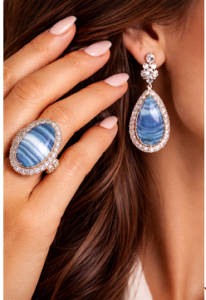
What Is Agate?
Agate is a variety of chalcedony (microcrystalline quartz) known for its striking bands, layers, and patterns in many colors — from red, black, and yellow to mossy or multicolored varieties. It’s valued for both jewelry and decorative uses.
🧠 Key Properties
⦁ Mineral class: Chalcedony (Quartz family)
⦁ Chemical formula: SiO₂ (silicon dioxide)
⦁ Hardness: ~6.5 – 7 on the Mohs scale — durable enough for everyday jewelry.
⦁ Luster: Vitreous (glassy) when polished.
⦁ Transparency: Translucent to opaque.
Agate’s beauty comes from its banding, patterns, mosslike inclusions, and rich colors, making each piece unique.
🎨 Common Types of Agate
Agate appears in many varieties, each with a distinct look and value:
⦁ Red Agate (Red Aqeeq) – classic and popular with earthy red tones.
⦁ Black Agate (Black Aqeeq) – deep black with smooth polish.
⦁ Yellow Agate – warm yellow hues.
⦁ Moss Agate – greenish, mosslike patterns resembling landscapes.
⦁ Pink and Other Colors – colorful variants used in jewelry.
⦁ Banded/Patterned Agates – with eyecatching stripes and contrasts.
💰 Agate Price Guide (Approximate)
💲Agate pricing depends heavily on color, pattern complexity, clarity, size, and whether the stone is polished or cut.
🇵🇰 Prices in Pakistan (approx)
Type / Size Approx Price (PKR)
Agate 15–33 ct stones ₨ 500 – ₨ 850 (simple polished stones)
Sulemani Agate 2–4 ct ₨ 2,500 – ₨ 2,500
Sulemani Agate ~3.5 ct ₨ 2,500
Sulemani Agate ~6.8 ct ₨ 6,000
Red Agate ~12 ct (retail) ~₨ 2,500
Moss Agate ~51 ct ~₨ 4,000
What Is Aquamarine?

Aquamarine is a blue to bluegreen gemstone belonging to the beryl family (just like emerald). Its name comes from Latin aqua marina meaning “water of the sea” — due to its serene seablue hue
🧠 Key Properties
⦁ Mineral: Beryl (Be₃Al₂Si₆O₁₈) — same family as emerald but with iron giving it the blue color.
⦁ Color: Pale blue to deep sky blue — the more intense the blue, the more valuable the stone.
⦁ Hardness: ~7.5 – 8 on the Mohs scale — durable enough for everyday jewelry.
⦁ Luster: Vitreous (glasslike shine) when polished.
⦁ Birthstone:March — often used for gifts and spiritual purposes.
⦁ Symbolism: Calmness, courage, communication, emotional balance, and good luck.
Aquamarine with good clarity and rich blue color is more prized — especially the socalled Santa Maria deep blue type.
💰 Aquamarine Price Guide
🇵🇰 Prices in Pakistan (Approx per Carat)
(Prices vary by color intensity, clarity, cut, and origin including local sources like GilgitBaltistan.)
Quality / Color Approx Price (PKR per ct)
Light blue (commercial quality) ₨ 2,000 – ₨ 8,000
Medium blue (better color/clarity) ₨ 10,000 – ₨ 25,000
Deep blue / Santa Maria type ₨ 30,000 – ₨ 120,000+
High clarity certified pieces ₨ 100,000 – ₨ 500,000+ per piece
💡 You can find loose stones locally like ~7–13 ct aquamarines around ₨ 10,000–₨ 16,000 depending on cut and color.
➡️ Higher quality blues with good transparency command much higher prices; pale or very light blue stones are usually more affordable.
🌍 International Price Insight
Worldwide, aquamarine prices generally depend on quality:
⦁ Commercial / lower color grade: ~$20 – $100+ per carat (~₨ 4,000–₨ 20,000)
⦁ Good jewellery grade: ~$150 – $400+ per carat (~₨ 30,000–₨ 80,000)
⦁ Deep blue premium: ~$800 – $900+ per carat (~₨ 150,000+) for rich color or collector quality.
Note: Prices change rapidly with market demand and gemstone reports, so always ask for a certification (lab report) when buying highvalue stones.

What Is Citrine?
Citrine is a yellow to golden gemstone that’s a variety of quartz. Its warm color ranges from pale lemon to rich honeygold, and it’s one of the most popular semiprecious stones used in jewelry. Most citrine on the market is heattreated amethyst or smoky quartz, which is widely accepted in the gem trade and still considered genuine citrine.
🧠 Key Properties
⦁ Mineral Type: Quartz (silicon dioxide)
⦁ Color: Yellow to amber/orange hues
⦁ Hardness: ~7 on the Mohs scale — durable enough for everyday rings and pendants
⦁ Luster: Vitreous (glassy shine)
⦁ Birthstone:November (modern alternative)
⦁ Symbolism: Positivity, abundance, confidence, clarity, and prosperity.
💡 Citrine is loved in jewelry because its bright golden color pairs beautifully with gold, silver, and platinum, making it ideal for rings, pendants, and earrings.
💰 Citrine Price Guide
🇵🇰 Prices in Pakistan (Approx.)
(Loose stones, per piece or per carat — depends on size, color depth, and cut)
Stone / Weight Approx Price (PKR)
1 ct Citrine ~₨ 2,000
2–3 ct Citrine ~₨ 3,000 – ₨ 6,000
7 ct Citrine ~₨ 6,000
~14–17 ct Citrine ~₨ 21,000 – ₨ 26,000
Various “Sunela/Jupiter Citrine” pieces ~₨ 12,000 – ₨ 25,000+
💡 Local gemstone sellers show that larger wellcolored citrine stones (10 + ct) often range from ₨ 20,000 – ₨ 25,000+ depending on cut and clarity.
🌍 International Price Range (Approx per Carat)
Prices globally vary based on quality and whether the stone is natural or heat treated:
Quality / Type Approx Price (USD per carat)
Heattreated citrine (common) ~$10 – $30 per ct
Natural citrine (rarer) ~$30 – $80 per ct
Larger fine pieces (5 + ct) ~$100 – $300+ per ct (premium)
What Is Peridot (Zabarjad)?

Peridot is a green gemstone belonging to the mineral olivine, known for its distinctive olivegreen to yellowgreen color. It’s one of the few gemstones that occur only in green hues.
🧠 Key Properties
⦁ Color: Yellowgreen to rich olive green — deeper green usually means higher value.
⦁ Mineral Family: Olivine (gem quality form is called Peridot).
⦁ Hardness:6.5–7 on the Mohs scale — fairly durable for everyday wear, but softer than sapphire or ruby.
⦁ Luster: Vitreous (glassy).
⦁ Birthstone:August — traditionally associated with good fortune and positivity.
Peridot has been treasured for thousands of years — ancient Egyptians called it the “gem of the sun,” and it’s linked with joy, prosperity, and calm energy.
💰 Peridot Price Guide
🇵🇰 Peridot Prices in Pakistan (Approx)
(Prices vary by color, clarity, size, origin, and whether it comes with certification.)
Stone / Size Typical Price (PKR)
Peridot per carat (good quality) ~₨ 1,500 – ₨ 2,000 per carat typical starting price
Loose stones 2–4 ct (natural) ~₨ 6,000 – ₨ 15,000+ depending on color & cut
Certified 3–4 ct stones ~₨ 8,500 – ₨ 13,000+
Larger certified pieces (7–10+ ct) ~₨ 20,000 – ₨ 30,000+
Smaller commercial peridots (~7.3 ct) ~₨ 13,690 (example)
💡 Basic peridot stones sold locally often start low (about ₨ 1,500 per carat), while larger, clearer, more vivid green stones command higher prices.
🌍 International Pricing (Approx)
(Global gem trade examples for context):
⦁ Commercial quality: ~$10 – $50 per carat (~₨ 3,000–₨ 15,000)
⦁ Fine quality (deep green, eyeclean): ~$100 – $500+ per carat (~₨ 30,000–₨ 150,000)
⦁ Exceptional/collector quality: ~$500+ per carat (rare).
Peridot is generally more affordable than many other gemstones like emerald and sapphire, but top colors and clarity can still push prices higher.

What Is Quartz?
Quartz is a hard crystalline mineral made of silicon dioxide (SiO₂). It is extremely common in the Earth’s crust and comes in many varieties, from clear crystals to colored types like rose quartz, smoky quartz, amethyst, and citrine.
⦁ Mineral Class: Silicate (Silicon Dioxide)
⦁ Hardness: 7 on the Mohs scale — suitable for jewelry and carvings.
⦁ Luster: Vitreous (glassy)
⦁ Colors: Clear, purple, pink, yellow, brown, smoky gray, and more.
⦁ Transparency: Transparent to opaque
Quartz is highly prized for spiritual, decorative, and jewelry purposes, and it has been used for thousands of years. (gemsociety.org)
🔹 Common Types of Quartz
Quartz Type Description / Color
Clear Quartz (Rock Crystal) Transparent, colorless, often used in jewelry and healing.
Rose Quartz Pink to rose-red, popular in pendants and bracelets.
Amethyst Purple variety (already covered separately).
Citrine Yellow to golden (already covered separately).
Smoky Quartz Brown to gray, often used in beads and cabochons.
Milky Quartz White, opaque, commonly used in carvings.
Ametrine Combination of amethyst & citrine, rare and multicolored.
💰 Quartz Price Guide
Quartz is affordable compared to precious gemstones, but pricing depends on type, color, size, clarity, and cut.
🇵🇰 Prices in Pakistan (Approx per Carat)
Quartz Type Price (PKR per ct)
Clear Quartz ₨ 100 – ₨ 500
Rose Quartz ₨ 200 – ₨ 1,000
Smoky Quartz ₨ 250 – ₨ 1,200
Citrine / Ametrine ₨ 2,000 – ₨ 25,000 (premium pieces)
Large Decorative Crystals ₨ 5,000 – ₨ 50,000+ (specimens & geodes)
What Is Lapis Lazuli (Lajward)?
Lapis Lazuli is a semiprecious gemstone known for its intense deep blue color often accented with goldcolored flecks (pyrite) and sometimes light white streaks (calcite). It’s been prized for thousands of years in jewelry, ornaments, and art.

What it’s made of:
⦁ Main mineral: Lazurite (gives the blue color)
⦁ Other minerals: Pyrite (sparkly gold flakes) and calcite (white patches)
Origins
Lapis Lazuli is traditionally mined in Afghanistan (Badakhshan), and also in small quantities in Chile, Russia, Pakistan, and other regions.
Symbolism & meaning:
⦁ Represents wisdom, truth, inner power, and calmness
⦁ Used historically in royal jewelry and pigments (ultramarine blue) for paintings
📌 Key Properties
⦁ Color: Intense royal blue with gold pyrite specks (most prized)
⦁ Hardness: ~5.5–6 on Mohs – softer than quartz and sapphire
⦁ Luster: Waxy to vitreous when polished
⦁ Transparency: Opaque to slightly translucent edges
💰 Price & Value (Approx)
🇵🇰 In Pakistan (Loose Stone Pricing)
(Prices vary greatly by size, deepness of blue, pyrite presence, and finish)
Stone Weight / Quality Typical Price (PKR)
Small pieces (5–12 ct) ~₨ 2,000 – ₨ 3,000+
Medium stones (25–30 ct) ~₨ 5,000 – ₨ 6,000+
Jewelry quality (13–18 ct) ~₨ 7,000 – ₨ 8,750+
Larger quality stones (25–40+ ct) ~₨ 5,000 – ₨ 8,400+
💡 Example listings show ~14–17 ct lapis stones priced ~₨ 7,000–₨ 8,800 locally with decent color.
What Is Malachite?

Malachite is a green mineral gemstone famous for its rich, banded green patterns and unique swirling stripes. It’s a copper carbonate hydroxide mineral (solidified copper ore) and has been used in jewelry, ornaments, carvings, and decorative art for thousands of years.
🧠 Key Properties
⦁ Color: Bright to deep green with distinctive banded lines and swirls.
⦁ Hardness: ~3.5–4 on the Mohs scale — softer than many gemstones (handle gently).
⦁ Luster: Waxy to vitreous when polished.
⦁ Transparency: Opaque.
⦁ Usually cut as cabochons (smooth polished domes) to show off its bands.
⦁ Often associated with heart chakra energy and emotional transformation in metaphysical traditions.
💰 Malachite Price Guide
🇵🇰 Approx Malachite Prices in Pakistan (Loose Stones)
Prices vary with size (carat), band patterns, polish, and source.
Stone Weight / Type Approx Price (PKR)
~5–10 ct natural malachite stones ~₨ 1,100 – ₨ 1,600 PKR
~10–15 ct stones ~₨ 2,000 – ₨ 3,500 PKR
~19–20 ct stones ~₨ 4,500 – ₨ 6,700 PKR
~24–30+ ct stones ~₨ 8,000 – ₨ 17,000+ PKR
💡 Local jewelry sellers (e.g., Pure Gems, GK Jewelers, HunzaBazar) show that mediumsize stones (~10–20 ct) often range roughly from ₨ 2,000–₨ 8,000 depending on pattern and finish.
📦 Simple cabochons or rough malachite pieces are usually quite accessible, while large, wellpatterned stones or jewelry sets cost more locally.

What Is Moonstone?
Moonstone is a gemstone from the feldspar group known for its characteristic shimmering glow called adularescence — a soft, moonlike light that appears to float inside the stone as it moves.
It can range from milky white to translucent gray or blue, and the value increases with stronger sheen or rainbow flashes.
✨ Often tied to intuition, emotional balance, new beginnings, and calm energy — many people wear it for spiritual & emotional benefits as well.
🧠 Key Properties
⦁ Mineral type: Feldspar group
⦁ Color: White, gray, bluish, or rainbow with shimmering adularescence
⦁ Hardness: ~6–6.5 on Mohs scale (reasonably durable but not super hard)
⦁ Luster: Satin to vitreous
⦁ Birthstone:June (associated with emotional intuition)
⦁ Common cut: Cabochon (smooth rounded top to show glow best)
💰 Moonstone Price Guide
🇵🇰 Prices in Pakistan (Approx)
Prices vary based on color, adularescence strength, clarity, origin, size & cut:
Type / Weight Approx Price (PKR)
Small stones (~6.5 ct) ~₨ 3,000 – ₨ 4,000
10–12 ct stones ~₨ 3,000 – ₨ 6,000
~17–18 ct stones ~₨ 8,500 – ₨ 16,500
Standard quality per carat ~₨ 500 – ₨ 2,500
High quality (rainbow/blue sheen) per carat ~₨ 3,000 – ₨ 10,000+
💡 A simple midrange moonstone for jewelry often costs just a few thousand rupees for a decent size. Premium rainbow or blue sheen stones are rarer and cost more per carat.
What Is Sunstone?
Sunstone is a gemstone from the feldspar mineral group. It’s valued for its warm colors — typically orange, red, gold, brown, and sometimes green — and its sparkling optical effect called aventurescence (shimmering flashes from internal inclusions).

✨ This shimmer, caused by tiny inclusions of hematite, copper, or goethite, gives the gem a sunlit glow, which is why it’s called Sunstone.
It’s often cut as cabochons (smooth domes) or faceted to enhance sparkle and shine.
🌈 Gemstone Properties
⦁ 🧪 Mineral family: Feldspar (includes oligoclase or microcline forms)
⦁ 🎨 Color range: Warm golden, orange, reddish, brown, greenish hues
⦁ 💎 Optical effect: Aventurescence (metallic glitter when light hits)
⦁ 🪨 Hardness: ~6.0–6.5 on Mohs scale (moderate — good for jewelry with care)
⦁ ✨ Luster: Vitreous to slightly metallic shimmer
⦁ 📆 Birthstone: Often associated with August in crystal healing contexts.
Sunstone is prized for warm, uplifting energy and vitality, and in many traditions it’s believed to represent joy, optimism, strength, and creativity.
💰 Sunstone Price Guide
🇵🇰 Approximate Prices in Pakistan
(These are based on real market listings for loose stones from local sellers.)
Weight / Type Approx Price (PKR)
Sunstone ~6 carat ~₨ 2,200 – ₨ 2,500 (midrange)
Sunstone ~8–9 carat ~₨ 2,800 – ₨ 3,350
Sunstone ~10–12 carat ~₨ 3,500 – ₨ 3,900
Sunstone ~14 carat ~₨ 4,500
💡 These prices for polished, natural sunstone cabochons show that good quality stones are very affordable — typically a few thousand rupees per piece depending on size and sheen.
🔎 Cheaper pieces are also sold online (like small polished stones around ~₨ 1,000–₨ 1,500 on local classifieds), though quality and certification vary

What Is Tanzanite?
Tanzanite is a blueviolet gemstone and a variety of the mineral zoisite, first discovered in the 1960s near Mount Kilimanjaro, Tanzania — its only significant natural source in the world. Its vivid blueviolet hues and rarity make it highly sought after in fine jewelry.
🧠 Key Properties
⦁ Color: Vivid blue to bluishviolet; the most prized stones have intense violetblue saturation.
⦁ Hardness: ~6–7 on the Mohs scale — somewhat softer than sapphires and rubies, so care is needed for daily wear.
⦁ Optical Property: Strong pleochroism — showing different colors (blue, violet, sometimes brownish) when viewed from different angles.
⦁ Luster: Vitreous (glassy shine).
Most tanzanite on the market is heattreated to enhance its blue/violet color, which is a widely accepted practice.
💰 Tanzanite Price Guide (Approximate)
Tanzanite value varies dramatically with color intensity, clarity, cut quality, and size (carat weight). The following are general price ranges — actual prices depend on individual stone quality, certification, and retail markups:
🌍 International Approx Prices (Loose Gems, per Carat)
(All prices approximate and fluctuate with market trends.)
Quality Tier Estimated Price per Carat (USD)
Commercial / Light Color / Included ~$50 – $150 (lower saturation)
Standard / Medium Blue ~$150 – $400
Fine / Vivid BlueViolet (AAA) ~$400 – $800+
Premium / Deep Color & Larger Size ~$800 – $1,500+ (for top vivid blue over ~2–3 ct)
💡 Mostwellcolored, eyeclean tanzanite falls in the $300–$800+ per carat range internationally. Larger stones with exceptional color can exceed $1,000 per carat, especially above 3 ct.
🇵🇰 Tanzanite Prices in Pakistan (Approx)
Local pricing in Pakistan can vary widely depending on color tone, clarity, cut, and whether certified. A rough guide (per carat):
Quality / Color Approx Price (PKR per Carat)
Light / Commercial ~₨ 3,000 – ₨ 10,000+
Medium Blue / Good Clarity ~₨ 10,000 – ₨ 30,000+
Deep VioletBlue / High Quality ~₨ 30,000 – ₨ 80,000+
Premium Larger Fine Stones ~₨ 80,000 – ₨ 200,000+ per carat (top vivid blues)

What Is Tourmaline?
Tourmaline is a gemstone family known for its incredible range of colors — basically every color of the rainbow. It comes in pure hues and mixed color patterns, and different varieties carry unique names and values. Tourmaline’s colors are caused by trace elements (like iron, manganese, copper), and the gem can also show optical effects like color zoning and pleochroism (different colours seen at different angles).
🔹 Key Properties
⦁ Mineral Class: Complex borosilicate (tourmaline group)
⦁ Color Range: Green, pink, red, blue, bicolor (watermelon), Paraíba neon blue/green, and more
⦁ Hardness: ~7–7.5 on the Mohs scale — durable for jewelry with daily wear
⦁ Luster: Vitreous (sparkling glasslike)
⦁ Variation: Multiple “moods” — single color, bicolor (e.g., watermelon), or tricolor
Tourmaline is sometimes called the “rainbow gemstone” because of its huge palette of vivid colors.
🎨 Popular Tourmaline Varieties
Variety Colour(s) Notes
Verdelite (Green Tourmaline) Green Classic and popular in jewelry.
Rubellite Pink to red Often compared to ruby tones.
Indicolite Blue Rarer than green/pink.
Watermelon Tourmaline Pink/Green bicolour Very desirable for its natural twotone.
Paraíba Tourmaline Neon blue/green Extremely rare and highly valued.
Black Tourmaline (Schorl) Black Common and affordable, often used for protection/metaphysical.
💰 Tourmaline Price Guide
🇵🇰 Approx Prices in Pakistan
These ranges are based on current local gemstone listings and market sources:
⦁ Natural loose tourmaline (medium quality): ~₨ 4,000 – ₨ 8,000 per stone (various colors, untreated)
⦁ Premium medium stones (4–8 ct from Hunza): ~₨ 6,800 – ₨ 16,500+ total depending on size & color
⦁ Higher quality varieties (e.g., stronger colors, better clarity): ~₨ 10,000 – ₨ 35,000+ per carat (especially bicolor or vivid pieces)
⦁ Top rarer tourmalines (like fiery red rubellite or orange Firefox): ~₨ 40,000 – ₨ 150,000+ per carat for premium quality
💡 Prices can vary widely based on color saturation, clarity, cut, origin, and certification. Basic or included stones can be affordable, while intense, eyeclean and rare color stones command premium prices.

What Is Zircon?
Zircon is a natural gemstone made of zirconium silicate (ZrSiO₄). It’s known for its exceptional sparkle, clarity, and vibrant colours — often compared to diamonds in brilliance, though it’s chemically and structurally different from cubic zirconia (which is a synthetic diamond simulant).
✨ Zircons have been used in jewellery for thousands of years and were historically prized for their fire and shine.
Note: Make sure you’re buying natural zircon, not cubic zirconia (CZ) — those are labmade and inexpensive.
📌 Key Gemstone Properties
Property Detail
Mineral Type Zirconium Silicate (natural gemstone)
Colour Range White (colourless), Blue, Yellow, Brown, Red, Green, Orange
Hardness ~6.5–7.5 on Mohs scale — somewhat durable but can be brittle
Lustre Vitreous (glasslike) — strong brilliance and fire
Optical Pleochroic (shows different colours at different angles)
Birthstone Sometimes used as a modern December gemstone
👉 Zircon is not a diamond chemically, but its high refractive index and fire give it a sparkly look that makes it great for jewellery.
💰 Zircon Price Guide
🇵🇰 Approx Prices in Pakistan
(Prices vary widely by colour, clarity, cut, carat weight, and origin)
Carat / Type Approx Price (PKR)
1–2 ct Standard White / Colourless ~₨ 300 – ₨ 1,500
2–3 ct Fine Stone ~₨ 1,800 – ₨ 5,500
4–6 ct Premium Cut ~₨ 6,000 – ₨ 18,000
HighGrade Clear (Top Brilliance) ~₨ 20,000 – ₨ 65,000+
Large / Fancy Colour (e.g., Sri Lankan / Afghan) ~₨ 22,000 – ₨ 85,000+
💡 Blue zircon (especially electric skyblue) and rare vibrant colours often sell at top prices because of rarity and brilliance.

What Is Morganite?
Morganite is a pink to peachpink gemstone in the beryl family (the same group that includes emerald and aquamarine). It’s prized for its soft, delicate colours and feminine, romantic appeal. It was named after J.P. Morgan, the famous financier and gem collector.
🧠 Key Properties
⦁ Mineral: Beryllium aluminum silicate (beryl)
⦁ Colour: Light pink, peachpink, salmon or pastel rose
⦁ Hardness:7.5–8 on Mohs scale — good durability for jewelry.
⦁ Lustre: Vitreous (glassy).
⦁ Optical: Pleochroic — looks slightly different from different angles.
⦁ Transparency: Usually eyeclean and transparent.
Because it’s a beryl variety, morganite has excellent brilliance and clarity — often better than many other pink gemstones.
💰 Morganite Price Guide
Morganite prices vary widely depending on colour intensity, clarity, cut, and size (carat weight).
🌍 International Approx Prices (USD per Carat)
(General market guide)
Quality / Colour Typical Price per Carat (USD)
Light pink / pale tones ~$50 – $150 per ct
Medium pink / peach ~$150 – $400 per ct
Deep pink / salmon / intense colour ~$400 – $1,000+ per ct
➡️ High quality, richly coloured morganites — especially in the 3–5 ct range with minimal inclusions — can approach the upper end of these ranges.
💡 A mediumquality stone in the $100–$300 per carat range is common and gives great value compared to many coloured gemstones.
🇵🇰 Morganite Prices in Pakistan (Approx)
Local retail prices can vary, but typical listings include:
⦁ Simple polished or small morganite stones around ~₨ 15,000 total (single stone) on general marketplaces.
⦁ Loose gem prices can vary but often align with moderate percarat values, depending on colour and quality.
📌 Example from Pakistan: Local online listings sell individual morganite stones (unspecified weight) for around ₨ 15,000 — though the quality and exact size can differ.

What Is Spinel?
⦁ Mineral: Magnesium aluminium oxide; cubic crystal system.
⦁ Colors: Red, pink, blue, purple, orange, black, and more.
⦁ Hardness: ~8 on Mohs scale — very durable and great for everyday jewelry.
⦁ Luster: Vitreous (glasslike brilliance).
⦁ History: Historically misidentified as ruby — e.g., some royal “rubies” are actually spinel.
Spinel shines beautifully when faceted and is a popular choice for rings, earrings, pendants, and more because of its vivid colour and durability.
💰 Spinel Price Guide
🇵🇰 Approx Spinel Prices in Pakistan
(These vary by colour, cut, clarity, and size — faceted stones always cost more than rough):
Type / Weight Approx Price (PKR)
Small common colours (per carat) ~₨ 3,000 – ₨ 10,000
Midquality faceted (2–4 ct) ~₨ 40,000 – ₨ 80,000+
Premium rich reds/pinks ~₨ 80,000+ per carat for top pieces
Examples from local gem sellers show stones roughly 2.5–3.5 cts ranging from ~₨ 47,000 to ~₨ 84,000.
Worldwide, quality spinel (red or vivid colours) can be priced from hundreds to thousands of USD per carat, especially for eyeclean stones with great saturation.
📊 What Affects Spinel Value?
✨ Color Intensity:
⦁ The most valuable are rich red or vivid pink spinels — often compared to ruby in beauty.
⦁ Rare blue “cobalt” and pure colours also command high prices.
✨ Clarity & Cut:
⦁ Eyeclean spinels with excellent cuts sparkle the most and are more prized.
⦁ Faceted stones are typically worth more than rough.
✨ Carat Weight:
⦁ Larger spinels are rarer; price per carat rises with size.
✨ Origin & Treatment:
⦁ Untreated, natural spinels are most desired. Most spinels are natural (rarely treated).
What Is Chrysoberyl?
Chrysoberyl is a hard, durable gemstone in the beryllium aluminum oxide family with excellent brilliance and fire. It’s distinct from beryl (aquamarine/emerald). There are several popular varieties:
🧠 Main Types

Yellow/green chrysoberyl: The classic form — yellowishgreen to golden hues with brilliant sparkle.
⦁ Cat’s Eye Chrysoberyl: Polished into cabochons showing a sharp band of light (“chatoyancy”) called the cat’s eye effect.
⦁ Alexandrite: A colorchanging chrysoberyl variety — green by daylight and red under incandescent light (very rare and expensive).
Hardness: ~8.5 on Mohs — excellent for dailywear jewelry like rings and bracelets.
💰 Chrysoberyl Price Guide
Prices vary widely based on type, color, clarity, cut, and size.
🇵🇰 Approx Prices (based on current regional markets)
Loose stones, PKR / overall estimate — real prices can differ by seller & quality)
Type / Size Approx Price
Natural Cat’s Eye (~15.8 ct) ~₨ 7,900 (natural but simple quality)
Small Cat’s Eye (~2.5 ct) ~₨ 13,000–₨ 18,000 (certified)
Higher quality cabochons (8–12 ct) ~₨ 60,000–₨ 85,000+ (premium)
Large commercial chrysoberyl (~4 ct) ~$900+ (~₨ 200,000) internationally
💡 Simple yellowgreen chrysoberyls may be more affordable, while cat’s eye with sharp effects and larger sizes are pricier.
🌍 International Price Ranges (Approx per ct)
(based on global gem guides)
Variety USD per Carat
Basic yellow/green chrysoberyl ~$50 – $500 per ct
Green / saturated colors ~$100 – $800 per ct
Cat’s eye (good chatoyance) ~$300 – $2,000+ per ct
Alexandrite (colorchange) ~$500 – $100,000+ per ct (rare & collectible)
➡️ Ordinary chrysoberyl is generally less expensive than alexandrite, but fine cat’s eye and strong colors can be high value

Pure & Natural Alexandrite
Alexandrite is a rare colorchanging variety of chrysoberyl that famously shifts color depending on lighting — typically green in daylight and red/purple under incandescent light.
What Makes Alexandrite Special
✔ColorChange Phenomenon: Green to bluishgreen in daylight → red, purplishred in incandescent light. This dramatic change is the hallmark of alexandrite and drives its value.
✔Hardness: ~8.5 on Mohs scale — excellent for everyday jewelry like rings.
✔Rarity & History: Discovered in Russia’s Ural Mountains in the 1830s; fine material is extremely rare.
✔Pleochroism: Shows different colors from different angles.
Because natural colorchange stones are scarce, alexandrite is one of the most expensive colored gemstones per carat.
💰 Alexandrite Price Guide
🌎 International Price Ranges (per carat, natural stones)
Quality / Size Approx Price (USD per ct)
Good color change, small (<1 ct) ~$800 – $2,500+
1–2 ct medium quality ~$2,000 – $6,000+
High quality, vivid color change ~$7,000 – $15,000+
Exceptional, large stones >3 ct ~$15,000 – $100,000+
💡 Truly rare and museumgrade alexandrite — particularly stones with strong, even color change and excellent clarity — can exceed $100,000 per carat.

Amber — Pure & Natural (Raw/Fossil Resin)
Amber is ancient fossilized tree resin, not a typical crystalline mineral. Its organic origin makes it lightweight and full of warm colours — from honeyyellow to rich orange or cognac tones.
Amber in Jewelry
Amber’s warm, glowing tones are very popular in jewelry — especially in cabochons, beaded necklaces, bracelets, pendants, and earrings. It’s polished rather than faceted because of its organic nature.
Examples of amber jewelry include:
⦁ Amber cabochon rings set in silver or gold
⦁ Beaded amber necklaces and bracelets
⦁ Pendants with transparent amber
These pieces highlight amber’s depth and colour.
💎 What Amber Really Is
⦁ Organic gemstone: Fossilized tree resin hardened over millions of years — one of the oldest gems used in jewelry.
⦁ Hardness:~2–2.5 on Mohs scale — much softer than quartz or sapphire, so it scratches easily.
⦁ Appearance: Typically yellow, honey, orange, brown, with rarer colours like green or blue in some localities.
⦁ Clarity: Can be transparent to translucent; inclusions (especially insect fossils) are collectorvalued.
💰 Amber Price Guide
🇵🇰 Amber Prices in Pakistan (Approx)
(Loose stones, retail markets — current online listings)
Weight Approx Price (PKR)
~1.75–2.5 ct natural amber ~₨ 4,400 – ₨ 6,000
~3.65 ct amber ~₨ 8,800
~4.0 ct amber (oval cabochon) ~₨ 10,369 – ₨ 10,499
~4.25 ct amber ~₨ 11,156
Amber bead tasbih / amber bead strands ~₨ 35,000+
👉 Midrange pieces (3–4 ct cabochons) are typically priced around ₨ 7,500 – ₨ 11,000+ in Pakistani craft markets.
🌍 International Amber Pricing (Rough Guidance)
According to global gem pricing guides:
⦁ Common Baltic amber: ~$10–$100 per carat (~₨1,500–₨15,000 per ct) for transparent, pleasant colours.
⦁ Rare types (blue, green, unique inclusions): $50–$300+ per carat (~₨7,500–₨45,000+) or higher.
⦁ Collector pieces with fossils/insects: Can exceed $1,000+ depending on rarity & size.
Note: Amber is typically sold by carat for cut gems or by weight/strand for bead jewelry — this affects pricing.

What Is Coral (Marjan)?
Coral gemstone (often called Marjan, Moonga, or simply Coral) is an organic gemstone formed from the skeletons of coral animals in marine environments. It’s valued for its colors — especially rich red and orange, but also pink, white, black, and blue varieties.
Key Properties
⦁ Origin: Marine coral skeletons (organic).
⦁ Hardness: ~3–4 on the Mohs scale — much softer than quartz or sapphire, so it needs careful handling in jewelry.
⦁ Colors: Red (classic), orange, pink, white, black, and less common blues and greens.
⦁ Luster: Waxy or glassy after polishing.
⦁ Transparency: Usually opaque or semiopaque.
Coral has been used in jewelry for thousands of years, valued both for beauty and traditional symbolism.
💰 Coral Price Guide
🇵🇰 Approx Coral Prices in Pakistan
(Retail loose stones / cabochons per carat or per piece)
Coral Type / Size Approx Price (PKR)
Natural Coral ~6.98 ct (offwhite) ~₨ 10,470
Natural Coral ~7.26 ct (red) ~₨ 7,405
Natural Coral ~12.20 ct (red) ~₨ 12,444
Natural Coral ~13.29 ct (red/orange) ~₨ 9,037
Italian Red Coral ~14–17 ct (raw gem) ~₨ 13,986 – ₨ 16,998
Large Fossil Coral ~39.5 ct ~₨ 5,989
Small coral bead / 1.40 ct example ~₨ 2,100
👉 Local sources estimate lowerquality coral around ₨ 2,000 – ₨ 10,000 per carat, medium quality ~₨ 10,000 – ₨ 50,000 per carat, and premium/top quality pieces (deep red Italian/special origins) can go ₨ 50,000 – ₨ 200,000+ per carat.
🌍 Approx International Coral Price Ranges
(General global ranges)
⦁ Red coral (high quality): approx $100 – $3,000+ per carat for deep red “oxblood” varieties.
⦁ Angelskin/pink coral: ~$300 – $1,200 per carat.
⦁ Salmon coral: ~$200 – $800 per carat.
⦁ White coral: ~$100 – $500 per carat.
⦁ Unique carved pieces: prices vary widely depending on craftsmanship.
What Ivory Really Is

Ivory is not a typical gemstone like ruby or sapphire — it’s an organic material taken mainly from animal tusks or teeth (historically elephants, but also walruses, hippos, etc.). It has a smooth, creamy white look and can be finely carved for jewelry and art.
Because of major global bans on elephant ivory to protect endangered species, genuine ivory from elephants is mostly illegal to trade or sell in most countries unless it’s verified antique with official documentation (like pre1975 antiques in some places).
🪶 Ivory — Natural & Alternative Pictures
🐘 IvoryStyle Raw Material
These don’t show true elephant ivory (which can’t legally be sold new in many places) — but similar bone, tagua nut “vegetable ivory,” or fossil ivory pieces often used in jewelry:
Ivorystyle carved raw pieces (bone/tagua nut lookalikes)
Ivory/ivorycolored beads ready for jewelry
Note: True ivory (elephant tusk or mammoth) has distinctive Schreger lines — curved fine crosshatch patterns visible under magnification.
💍 IvoryStyle Jewelry
Because real elephant ivory is now restricted, jewelry often uses legal alternatives that look like ivory:
Beaded “ivorycolored” necklace
Ivorystyle carved pendants / brooches
These are often made from tagua nut (vegetable ivory), bone, or synthetic resin, which mimic ivory’s creamy hue but are legal and ethical.
💰 Price & Market Overview
Because elephant ivory trade is restricted worldwide, most ivorylike jewelry you can buy today is:
🐘 Mammoth Ivory (Fossil) — Legal where documented
⦁ 💎 Bracelets / beads / pendants: ~$100–$600+ (depending on size and detail)
⦁ Carvings/ornaments: Can be higher if artisanmade.
Legal with proper documentation and country compliance.
🪶 Antique Elephant Ivory (PreBan)
⦁ Genuine antique pieces (140+ years or with proven provenance) can fetch hundreds to thousands USD in auctions/collectible markets — but very few legal sales exist today.
🌱 Ivory Alternatives (Eco and Affordable)
Material Approx Price Range Notes
Tagua Nut (Vegetable Ivory) ~$5–$80 Renewable, ethical substitute, ivorylike look.
Bone IvoryStyle ~$8–$150 Often used in fashion/beads.
Synthetic Ivory/Resin ~$10–$50 Light, inexpensive, legal worldwide.
Mammoth Ivory (fossil) ~$200–$800+ Legal collectible with documentation.
⚠️ Elephant ivory pricing today (raw tusks) is illegal and part of black markets; estimated street averages might be ~$400/kg but carry legal risk and conservation harm.

Jet — Pure / Raw Gemstone
Jet is an organic gemstone formed from fossilized wood or compressed lignite (a precursor to coal) over millions of years. It’s prized for its rich deep black colour, lightness, and smooth surface when polished — and the very term “jetblack” comes from this material.
Polished jet gemstone pieces (raw/uncut shown top left, polished pieces alongside) — deep black and opaque, often with a satin or soft sheen.
💍 Jet in Jewelry
Jet has been used in jewelry for thousands of years, from prehistoric beads to Roman amulets, Medieval crosses, and Victorian mourning pieces. Today it’s mostly polished and set in classic designs.
Black jet cabochon set in rings or pendants (example reference — real pieces vary by maker).
Jet necklace and bracelet styles — sleek, elegant black pieces perfect for minimalist designs.
Jet jewelry typically appears as cabochons, beads, pendants, bracelets, or carved motifs. Its lightweight nature makes it comfortable even as larger pieces.
🔎 What Jet Is
Jet isn’t a mineral — it’s a mineraloid (organic gemstone), similar to amber or pearl. It is formed when ancient wood undergoes extreme pressure over geological time, turning it into a dense black substance that takes a beautiful polish.
Properties
⦁ Color: Deep black or dark brown, sometimes with metallic pyrite inclusions.
⦁ Hardness: ~2.5–4 on Mohs scale (relatively soft).
⦁ Lustre: Waxy to vitreous when polished.
⦁ Weight: Light — much lighter than true stone; feels warmer than glass.
Ancient sources like Whitby, England were famous for highquality jet (“Whitby Jet”), used extensively in Victorian mourning jewelry.
💰 Jet Pricing & Value
Jet is generally affordable compared with most gemstones, but value depends on age, quality, and whether the piece is antique.
General Jet Pricing
(Worldwide and retail, not certified lab gems)
Loose Jet / Tumbled Pieces
⦁ ~₨ 300–₨ 4,500+ for small polished stones, pendants, or tumblestones (varies by size and quality).
Jet Jewelry
⦁ Modern jet pendants/necklaces: ~$25–$150+ (₨ 4,000–₨ 25,000*) depending on design and quality.
⦁ Cabochon rings or larger pieces can be pricier if handcrafted or vintage
Antique / Collectible Pieces
⦁ Victorian era jet pieces can command £50–£2,000+ (~₨ 13,000–₨ 500,000+) depending on rarity, provenance, and condition.
Note: Because jet is softer and organic, its value is often more about craftsmanship and history (especially antique items) than percarat gemstone price.

Obsidian — Raw / Natural Stone
Large raw black obsidian stone — volcanic glass with smooth, shiny surfaces
Rough chunks of obsidian before polishing
Obsidian is a natural volcanic glass formed when molten lava cools very quickly — so no crystals form, giving it a rich, glossy surface. Its most common color is deep black, but it can also appear in mahogany (reddishbrown), snowflake (grayishflecked), and golden sheen varieties.
💍 Obsidian in Jewelry
Obsidian gemstone pendant set in jewelry
Beaded obsidian necklace — shows how polished beads are used
Obsidian cabochon necklace
Raw obsidian crystal pendant necklace
Obsidian is often polished into cabochons, beads, pendants, and bracelets. Its striking deep black look makes it popular in both casual and elegant jewelry designs.
💎 What ObsidianIs
Obsidian is not a traditional mineral — it’svolcanic glass formed when lava cools so fast that crystals don’t form. It has a glassy luster, conchoidal fracture (smooth curved breaks), and is usually opaque.
Typical properties
⦁ Color: Black (most common), also brown, green, rainbow, or golden sheen.
⦁ Hardness: ~5–5.5 on Mohs scale — softer than quartz but still durable for jewelry with care.
⦁ Luster: Vitreous (bright glasslike).
⦁ Formation: Volcanic glass from rapid cooling of lava.
Types you may see include black obsidian, snowflake obsidian (gray flecks), mahogany obsidian (reddish tones), and golden sheen obsidian that shows a flash of gold in light.
💰 Price Guide — Obsidian
🇵🇰 Approx In Pakistan
Loose/raw obsidian prices (imported stones sold locally):
⦁ ~950 g raw obsidian bulk ~₨ 7,400–₨ 7,800 (raw rough)
⦁ ~1 lb (~450 g) raw rough ~₨ 11,000–₨ 14,500 imported
⦁ ~842 ct (~168 g) raw loose stone ~₨ 15,600
⦁ Obsidian jewelry pieces (rings/pendants) typically range from ~₨ 1,300 – ₨ 3,000+ for simple handmade rings to higher for professional polished pieces (depending on design and metal).
Note: Obsidian is organic volcanic glass, so prices are generally affordable compared with crystalline gemstones like sapphire or emerald.
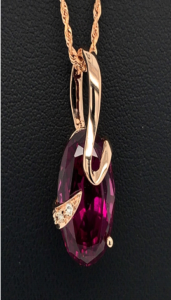
What Rhodolite Is
Rhodolite is a variety of garnet — specifically a mix of pyrope and almandine — with a chemical composition that produces roselike, raspberry to purplishred hues.
Key properties:
⦁ Color: Pinkish red to purplish red (often called raspberry or violetred).
⦁ Hardness: ~7–7.5 Mohs — durable for everyday jewelry.
⦁ Luster: Vitreous (glassy).
⦁ Transparency: Transparent to translucent.
⦁ No treatment: Most rhodolites are naturally colored without heat treatment.
The name comes from Greek rhodon meaning rose, referring to its roselike hues.
💰 Rhodolite Price Guide
🇵🇰 Prices in Pakistan (Approx)
(Retail loose stones & local listings)
⦁ ~1.74 ct Rhodolite (purplered) — ~₨ 7,830 (approx).
⦁ ~10.75 ct faceted Rhodolite — ~₨ 16,400.
(These are current online retail listings — actual prices may vary by seller, cut quality, and certification.)
🌍 International Price Ranges (Approx per Carat)
Based on global gemstone guides:
Quality / Type Approx Price (USD per ct)
Commercial / light color ~$20 – $100 / ct
Good quality ~$100 – $300 / ct
Fine quality ~$300 – $700 + / ct
Exceptional large, vivid stones $700 – $2,500 + / ct
Notes:
⦁ Larger stones (>5 ct) and deeper color saturation significantly increase value.
⦁ Tanzanian rhodolites are especially prized and can be higher in price due to superior color and clarity

What Tsavorite Is
Tsavorite Garnet is a green variation of grossular garnet, coloured by trace vanadium or chromium. It was first discovered near Tsavo National Park in Kenya and later also found in Tanzania.
Key Properties
⦁ 💚 Colour: Bright green to deep forest green — vivid even saturation is most prized.
⦁ 🔨 Hardness: ~7.0–7.5 on Mohs — tough enough for everyday rings.
⦁ 🌟 Lustre: High brilliance due to strong refractive index.
⦁ 🪩 Transparency: Usually transparent and often eyeclean (few visible inclusions) in good quality.
⦁ 🏔️ Origin: Mainly Kenya and Tanzania.
Tsavorite is rare in larger sizes, especially over 2 carats, which is why larger stones can be very expensive.
💰 Tsavorite Price Guide
🌍 Global Price Per Carat (Approx)
(Values vary widely by colour, clarity, size & origin)
Quality & Size Approx Price Per Carat (USD)
Smaller / lighter green (below 1 ct) ~$200 – $800
Medium (1–2 ct, good green & clarity) ~$1,000 – $4,000
Top quality (deep green, eyeclean) ~$3,000 – $8,000+
Rare large stones (>2 ct, vivid green) ~$4,000 – $10,000+
💡 Example: A 3.2 ct top green tsavorite loose stone listed around ~$1,750 (~₨ 500,000+) — prices rise rapidly with deeper colour and larger size.
Note: Colour is generally the single most important price driver — the richer and more evenly saturated the green, the higher the price.

Raw & Natural Benitoite Stones
Benitoite is known for its rich sapphirelike blue colour and stunning brilliance. It’s extremely rare — almost all gemquality material comes from San Benito County, California, USA.
Benitoite is used in highend jewelry — most often pendants, rings, earrings, and necklaces — because of its rarity and beautiful blue colour.
What Benitoite Is
Benitoite is a blue barium titanium silicate mineral (BaTiSi₃O₉) famous for:
✨ Striking sapphireblue to violetblue hues.
✨ Exceptionally high dispersion (fire) — even stronger than diamond.
✨ Strong fluorescence under UV light, glowing bright blue/white.
✨ Hexagonal crystal structure — crystals are rare and collectible.
💠 Hardness: ~6.0–6.5 on the Mohs scale — similar in hardness to tanzanite.
It’s the official state gemstone of California and remains one of the rarest gem minerals on Earth.
💰 Benitoite Price & Value
Benitoite is significantly rarer than sapphire, emerald, or tanzanite, and the pricing reflects that:
🌍 International Market Pricing (Approx, USD per Carat)
Stone Type / Quality Approx Price (USD/ct)
Rough benitoite (uncut) $75 – $400 / ct
Small faceted (<0.5 ct) ~$700 – ~$2,000 / ct
Medium faceted (0.5–1 ct) ~$2,000 – ~$4,000 / ct
Highquality ~1 ct ~$4,000 – ~$8,000 / ct
Fine ~1.8–2 ct stones ~$6,000 – ~$10,000 +/ ct
Precious >2 ct (rare & top colour) $10,000+ / ct
💡 Example listings online show a 1.82 ct faceted Benitoite at ~$6,397 and a 2.93 ct stone at ~$13,695 (prices listed ownerlisted).
📍 Most Benitoite cut stones are under 1 ct — stones over 1–2 ct are very rare (only a few % of all material).
Charoite — Rare Purple Gemstone
🪨 Raw / Pure Charoite Stone
Charoite is a distinctive purple gemstone known for its swirling patterns of lavender, violet, and sometimes white or black streaks. It is only found in Siberia, Russia, near the Chara River — making it rare and collectible.
What Charoite Is
⦁ 📍 Origin: Only found near the Chara River, Yakutia region, Siberia, Russia — this geographic exclusivity contributes to its rarity.
⦁ 🎨 Color & Pattern: Ranges from deep violet to lavender and lilac, often with swirling, scenic patterns.
⦁ 🔨 Hardness: ~5–6 on Mohs scale — softer than many traditional gemstones, so protective jewelry settings are recommended, especially for rings.
⦁ 💠 Luster: Vitreous to silky with unique texture.
⦁ 🌿 Transparency: Typically translucent to opaque.
Because of its rarity and striking appearance, charoite is popular with collectors and jewelry designers.

💰 Price & Value
Charoite is less expensive per carat than many precious gemstones, but its beauty and rarity can add value, especially in jewelry forms.
💵 Approx Price Ranges (Worldwide)
(Prices vary by quality, color intensity, pattern, size & cut):
⦁ Loose charoite cabochons: approx $0.50 – $4 per carat (standard quality)
⦁ Highquality vivid purple cabochons: approx $3 – $10+ per carat (premium color & pattern)
⦁ Charoite jewelry pieces (pendants/bracelets): often $50 – $200+ retail depending on design and setting
💡 Wholesale or collectible slabs and decorative carvings (like spheres or scenic pieces) can be much more expensive due to size and artistic shaping.
Note: Charoite pricing can be influenced more by pattern beauty and color saturation than by simple carat weight, since its striking look comes from the unique swirling patterns rather than pure clarity.
What Danburite Is

Danburite is a natural calcium boron silicate gemstone (chemical formula CaB₂(SiO₄)₂) known for its high clarity and brilliance and often compared to topaz or diamond in sparkle. It was first discovered in Danbury, Connecticut, USA in 1839 — which is where it gets its name.
Key properties:
⦁ Color: Usually colourless, but also found in pale yellow, light pink, tan or champagne.
⦁ Hardness: ~7–7.5 on the Mohs scale — good for jewellery and daily wear.
⦁ Crystal structure: Orthorhombic, often prismatic and clear.
⦁ Lustre: Glasslike (vitreous).
⦁ Transparency: Transparent, which lets the stone display excellent brilliance when faceted.
Danburite’s appearance is often bright and crystalclear, sometimes resembling clear quartz or topaz, but with a slightly warmer sparkle.
📸 How Danburite Looks
To see pictures of Danburite gemstones and jewellery, search for:
⦁ “danburite gemstone close up”
⦁ “danburite pendant necklace”
⦁ “danburite ring silver or gold”
⦁ “colourless danburite faceted stone”
You’ll find images of clear faceted gems, light pink or pale yellow danburite, and handmade jewellery pieces set in silver or gold.
💍 Danburite Jewellery & Pricing
🪩 Jewellery Examples (Online)
Here are typical kinds of Danburite jewellery you’ll find online with approximate prices (in USD) — many sellers list items internationally:
💎 Pendants
⦁ Wirewrapped natural Danburite crystal pendants: ~$20–$60
⦁ Sterling silver faceted Danburite pendant: ~$50–$110
⦁ Certified gemstone Danburite in silver or gold: ~$150–$280+
💍 Rings
⦁ Raw Danburite crystal ring (casual/boho style): ~$30–$40
⦁ Small faceted Danburite ring in sterling silver: ~$60–$150
⦁ Larger gemstone rings (silver or gold) with cut Danburite: ~$150–$360+
⦁ Highend gold engagement style Danburite rings: prices can exceed $500+ depending on quality and carat

What Euclase Is
Euclase is a rare and beautiful beryllium aluminium hydroxide silicate gemstone (BeAlSiO₄(OH)) known for its brilliant transparency and glassy luster. It forms in slender, prismatic crystals and can be breathtaking in colour and clarity. The name comes from Greek eu (“good”) and klasis (“fracture”), a reference to its perfect cleavage.
🧾 Key Characteristics
⦁ Chemical composition: BeAlSiO₄(OH)
⦁ Crystal system: Monoclinic
⦁ Color:
⦁ Light to deep blue
⦁ Colorless
⦁ Pale green
⦁ Yellow/green
⦁ Rare violet or bicolour combinations
⦁ Hardness: ~6.5–7.5 on the Mohs scale
⦁ Luster: Vitreous (glassy)
⦁ Transparency: Transparent to translucent
⦁ Cleavage: Perfect — makes it fragile and tricky to cut into jewellery gems compared with many other stones.
Euclase is related to beryl (emerald/aquamarine) in composition but differs in crystal structure and optical properties.
📸 Pictures & Typical Appearance
Here are search suggestions to find good visual references:
🔹 Loose crystal & rough forms:
⦁ “euclase natural rough gem”
⦁ “blue euclase crystal mineral”
🔹 Faceted gemstones:
⦁ “euclase faceted gemstone blue or colorless”
⦁ “bicolour euclase gem”
🔹 Jewellery with euclase:
⦁ “euclase gemstone pendant”
⦁ “euclase ring cut gemstone”
These searches will show you the transparent, often blue or colourless stones, sometimes in jewellery settings.
💍 Euclase in Jewellery
Euclase can be cut and faceted into gemstones used for jewellery, but because of perfect cleavage and brittleness, careful cutting and protective settings are important.
Common jewellery uses include:
⦁ Faceted gemstone rings — often with protective settings
⦁ Pendants or necklaces — faceted or cabochon cuts
⦁ Loose gemstones for custom jewellery designs
Because good quality faceted euclase is rare, pieces can be higher priced than many other semiprecious stones.
💰 Price Range
🪩 Loose Euclase Gemstones (per carat)
Prices vary significantly based on color, clarity, size and origin:
Wholesales & rough material:
⦁ Light blue: ~$5–$15 / carat
⦁ Colorless: ~$10–$15 / carat
⦁ Bicolour or unusual combinations: ~$30–$60 / carat
Faceted gem quality:
⦁ Light blue: ~$10–$103 / carat
⦁ Colorless: ~$100–$150 / carat
⦁ Green or yellow: ~$150–$450 / carat

What Fluorite Is
Fluorite is a halide mineral composed of calcium fluoride (CaF₂), prized for its wide range of colors and natural fluorescence. It forms in cubic or octahedral crystals and is popular both as a collector’s mineral and in jewellery.
Key properties:
⦁ Chemical formula: CaF₂
⦁ Color: Wide variety — purple, green, blue, yellow, pink, colorless, and even bicolour combinations
⦁ Hardness: 4 on the Mohs scale (soft for jewellery)
⦁ Luster: Vitreous (glasslike)
⦁ Transparency: Transparent to translucent
⦁ Fluorescence: Often glows under UV light
⦁ Crystal system: Isometric / cubic
Fluorite is sometimes called the “Genius Stone” or “Rainbow Fluorite” in metaphysical circles because of its color variety and clarity.
📸 Appearance & Pictures
Search for these terms for visual references:
⦁ “fluorite crystal cubic” — shows natural cubic crystals
⦁ “rainbow fluorite rough” — multi-colored mineral specimens
⦁ “fluorite gemstone pendant” — cut and polished jewellery examples
⦁ “fluorite bead bracelet” — polished beads for jewellery
Typical visuals:
⦁ Rainbow fluorite polished cabochons or spheres
⦁ Fluorite crystal clusters with purple, green, or blue colors
⦁ Wirewrapped fluorite pendants or rings
💍 Fluorite in Jewellery
Because of its low hardness (4), fluorite is fragile, so it’s usually used in pendants, earrings, and occasional rings (with protective settings).
Common jewellery forms:
⦁ Cabochons — polished domes to show color banding
⦁ Beads — for bracelets and necklaces
⦁ Wire-wrapped pendants — raw or tumbled stones
⦁ Spheres or carvings — sometimes for display or meditation jewellery
Avoid daily-wear rings in fluorite because it scratches easily
💰 Price Range
🪨 Loose Fluorite
⦁ Small rough pieces or tumbled stones: $1–$5 USD (~₨200–₨1,500 PKR)
⦁ Polished cabochons (10–20 mm): $5–$15 USD (~₨1,500–₨5,000 PKR)
⦁ Rare, multi-colored, high-quality specimens: ~$20–$50 USD (~₨6,000–₨15,000 PKR)
📿 Jewellery Prices
⦁ Fluorite bead bracelets: ~$5–$15 USD (~₨1,500–₨5,000 PKR)
⦁ Wire-wrapped pendants: ~$10–$30 USD (~₨3,000–₨9,000 PKR)
⦁ Cabochon rings in silver: ~$15–$50 USD (~₨5,000–₨15,000 PKR)
Prices depend on color intensity, banding, size, and metal used.

What is Garnet — Overview
Garnet is a group of silicate minerals that are used as gemstone material and as abrasives. It comes in many colours and varieties, though the deep red type is the most familiar.
🔎 Key Properties
⦁ Mineral Group: Nesosilicate minerals with formula X₃Y₂(SiO₄)₃.
⦁ Colours: Red is most common, but also green, orange, yellow, brown, black, pink and colourless.
⦁ Hardness: ~6.5–7.5 on Mohs scale — durable enough for many jewellery uses.
⦁ Lustre: Vitreous (glassy).
⦁ Transparency: Transparent to translucent.
🌈 Common Garnet Varieties
Each variety has slightly different chemistry and colours:
⦁ Pyrope: Classic deep red to purplish red.
⦁ Almandine: Dark red to brownish red.
⦁ Spessartine: Orange to reddish orange.
⦁ Grossular: Green or yellowgreen; includes Tsavorite (green).
⦁ Andradite: Includes Demantoid (brilliant green garnet).
⦁ Uvarovite: Rare emeraldgreen garnet.
📿 Garnet in Jewellery
Garnet is widely used in jewellery because of its range of colours, durability, and affordability. Common uses include:
⦁ Rings
⦁ Pendants & necklaces
⦁ Earrings
⦁ Bracelets (beads or faceted stones)
Prices vary by variety, size, cut, and colour intensity. Red almandine garnets are affordable and common, while rare green tsavorite or demantoid garnets can be much higher in price due to rarity.
💰 Approximate Pricing Guide
(Prices are approximate and can vary by market, quality, and size.)
💠 Loose Garnet Gemstones
⦁ Common red garnets (pyrope/almandine): Typically modest — often $5–$30 per carat for good quality small stones.
⦁ Orange spessartine or green grossular (tsavorite): Mid to high range $50–$300+ per carat.
⦁ Demantoid garnet: Can be $500–$1,500+ per carat or much more for fine stones because it’s rare and prized for brilliance

What Heliodor Is
Heliodor is the yellow to golden variety of Beryl (Be₃Al₂(SiO₃)₆), the same mineral family as Emerald and Aquamarine. Its name comes from Greek helios (“sun”) and doron (“gift”), meaning “gift of the sun”, reflecting its warm yellow color.
⦁ Chemical formula: Be₃Al₂(SiO₃)₆
⦁ Color: Yellow, golden, or greenish-yellow
⦁ Hardness: 7.5–8 on Mohs scale (durable for jewellery)
⦁ Luster: Vitreous (glass-like)
⦁ Transparency: Transparent to semi-transparent
⦁ Crystal system: Hexagonal
Heliodor is often confused with Citrine or Golden Beryl, but true Heliodor is part of the Beryl family and tends to have higher clarity and brilliance.
📸 Appearance & Pictures
Visual characteristics:
⦁ Transparent golden-yellow or greenish-yellow stones
⦁ Faceted gems show brilliant sparkle
⦁ Sometimes found as polished cabochons, beads, or rough crystals
Search terms for images:
⦁ “Heliodor gemstone raw crystal”
⦁ “Heliodor faceted gemstone”
⦁ “Heliodor ring or pendant”
💍 Heliodor in Jewellery
Heliodor is hard and durable, making it ideal for most types of jewellery:
⦁ Rings — brilliant faceted stones
⦁ Pendants & necklaces — polished or faceted gems
⦁ Earrings — studs or dangles
⦁ Bracelets — faceted beads or polished stones
Its golden color pairs beautifully with yellow or white gold and sterling silver.
💰 Price Range
Loose stones:
⦁ Small faceted Heliodor (1–3 ct): ~$50–$150 per carat
⦁ Larger, high-quality stones (5–10 ct): ~$200–$500+ per carat
⦁ Rare larger gems or exceptional clarity stones: prices can reach $1,000+ per carat
Jewellery pieces:
⦁ Silver Heliodor pendant: ~$50–$150
⦁ Gold Heliodor ring (~1–3 ct): ~$200–$600+
⦁ Larger statement pieces: ~$800–$2,000+ depending on size and setting
(Prices in PKR vary based on import, metal, and local market.)

What Iolite Is
Iolite is a gem-quality variety of the mineral cordierite, known for its rich blue to violet-blue color and strong pleochroism (the stone shows different colors when viewed from different angles).
⦁ Chemical formula: (Mg,Fe)₂Al₄Si₅O₁₈
⦁ Color: Blue, violet-blue, bluish-gray, sometimes yellowish-brown
⦁ Hardness: 7–7.5 on the Mohs scale — suitable for most jewellery
⦁ Transparency: Transparent to translucent
⦁ Luster: Vitreous (glass-like)
⦁ Crystal system: Orthorhombic
⦁ Pleochroism: Very strong — deep blue, light blue, violet depending on the angle (⦁ gemselect.com)
Iolite is sometimes called “Water Sapphire” because of its sapphire-like color and affordability.
📸 Appearance & Pictures
Visual characteristics:
⦁ Deep violet-blue to bluish-gray stones
⦁ Faceted gems show strong brilliance and pleochroic color changes
⦁ Polished cabochons or beads highlight the color shift
Search terms for images:
⦁ “Iolite gemstone faceted”
⦁ “Iolite raw crystal”
⦁ “Iolite ring or pendant”
💍 Iolite in Jewellery
Iolite’s hardness and attractive color make it ideal for:
⦁ Rings — faceted stones
⦁ Pendants & necklaces — cabochons or faceted
⦁ Earrings — studs or drop designs
⦁ Bracelets — faceted beads or tumbled stones
Because of pleochroism, Iolite looks different in sunlight vs indoor lighting, which adds visual interest to jewellery.
💰 Price Range
🪨 Loose Iolite Gemstones (per carat)
⦁ Small stones (1–3 ct): ~$5–$30 per carat
⦁ Medium-size high-quality faceted stones (3–7 ct): ~$20–$80 per carat
⦁ Rare, large, exceptional clarity stones: ~$100–$200+ per carat
📿 Finished Jewellery
⦁ Silver Iolite pendant or earrings: ~$20–$100
⦁ Gold Iolite ring (~1–3 ct): ~$100–$300
⦁ Larger statement pieces: ~$300–$700+ depending on size and setting

What Jadeite Is
Jadeite is a pyroxene mineral and the highest-quality form of jade, prized for its vibrant colors, translucency, and durability. Jadeite is rarer and more valuable than nephrite, the other type of jade.
⦁ Chemical formula: NaAlSi₂O₆
⦁ Color: Green (most valued), also white, lavender, yellow, black, orange, or red
⦁ Hardness: 6.5–7 on Mohs scale
⦁ Transparency: Opaque to semi-transparent; top-grade “imperial jade” can be highly translucent
⦁ Luster: Vitreous to greasy
⦁ Crystal system: Monoclinic
Jadeite is often associated with East Asian culture, especially in China, where it has been revered for thousands of years.
📸 Appearance & Pictures
Visual characteristics:
⦁ Rich emerald-green or “imperial green” is the most prized
⦁ Smooth, polished cabochons show color and translucency
⦁ Carved into bangles, pendants, beads, and figurines
Search terms for images:
⦁ “Jadeite gemstone cabochon”
⦁ “Jadeite bangle bracelet”
⦁ “Imperial jade necklace pendant”
Typical visuals:
⦁ Smooth green cabochons and beads
⦁ Bangles carved from high-quality jadeite
⦁ Polished pendants and rings showing semi-translucent green
💍 Jadeite in Jewellery
Jadeite is highly valued in jewellery for both colour and cultural significance:
⦁ Bangles & bracelets — most common in Chinese jewellery
⦁ Rings — usually cabochon-cut stones set in gold or silver
⦁ Pendants & necklaces — often carved or polished
⦁ Beads & earrings — small faceted or polished stones
Highest-grade jadeite (“imperial jade”) is extremely valuable, while lower grades or dyed jadeite are more affordable.
💰 Price Range
🪨 Loose Jadeite Gemstones
⦁ Low-grade or opaque jadeite: ~$10–$50 per carat
⦁ Medium quality green jadeite: ~$50–$300 per carat
⦁ High-quality semi-transparent green jadeite: ~$500–$5,000+ per carat
⦁ Imperial jadeite (rich emerald-green, translucent): $10,000+ per carat and can exceed $100,000 for museum-quality stones
📿 Finished Jewellery
⦁ Silver jadeite pendant/bracelet: ~$50–$300
⦁ Gold jadeite ring (medium quality): ~$500–$2,000
⦁ High-end bangles or pendants (imperial jade): $10,000+
Prices vary widely depending on color intensity, translucency, size, and origin

What Kunzite Is
Kunzite is the pink to violet variety of the mineral Spodumene, prized for its delicate color, clarity, and brilliance. It was named after George Frederick Kunz, a famous American gemologist.
⦁ Chemical formula: LiAlSi₂O₆ (Spodumene family)
⦁ Color: Pink, violet-pink, lilac, and occasionally near-colorless
⦁ Hardness: 6.5–7 on Mohs scale
⦁ Transparency: Transparent
⦁ Luster: Vitreous (glass-like)
⦁ Crystal system: Monoclinic
Kunzite is highly prized for its color and clarity, but it is sensitive to light, which may cause fading over time.
📸 Appearance & Pictures
Visual characteristics:
⦁ Light pink to deep violet-pink faceted gemstones
⦁ Often cut as emerald cut to maximize brilliance and reduce stress
⦁ Polished cabochons or tumbled stones are less common
Search terms for images:
⦁ “Kunzite gemstone faceted”
⦁ “Kunzite ring or pendant”
⦁ “Kunzite rough crystal”
Typical visuals:
⦁ Faceted deep pink Kunzite gemstones
⦁ Polished rings, pendants, and earrings
⦁ Raw Kunzite crystals with natural violet-pink hues
💍 Kunzite in Jewellery
Kunzite is used in rings, pendants, earrings, and necklaces, but because it is sensitive to light and cleavage-prone, it is often used in protective settings:
⦁ Rings — usually set in bezel or halo settings to protect edges
⦁ Pendants & necklaces — longer cuts highlight the stone’s color
⦁ Earrings — studs or dangles
⦁ Bracelets — beads or faceted stones (less common due to cleavage)
Avoid wearing Kunzite jewellery in direct sunlight for long periods to preserve color.
💰 Price Range
🪨 Loose Kunzite Gemstones (per carat)
⦁ Small stones (1–3 ct): ~$10–$30 per carat
⦁ Medium-size faceted stones (3–10 ct): ~$20–$100 per carat
⦁ Rare, high-quality large stones (>10 ct): ~$100–$500+ per carat
📿 Finished Jewellery
⦁ Silver Kunzite pendant/earrings: ~$30–$100
⦁ Gold Kunzite ring (~3–5 ct): ~$150–$500
⦁ High-end large statement pieces: $500–$2,000+ depending on size, cut, and setting
(Prices in PKR vary depending on import, quality, and metal used.)

What Labradorite Is
Labradorite is a feldspar mineral known for its iridescent optical effect called labradorescence, which makes it shimmer with blue, green, gold, or rainbow colors when light hits it.
⦁ Chemical formula: (Ca,Na)(Al,Si)₄O₈
⦁ Color: Gray, dark gray, or black base with iridescent flashes of blue, green, yellow, orange, or red
⦁ Hardness: 6–6.5 on Mohs scale
⦁ Transparency: Transparent to translucent; often opaque
⦁ Luster: Vitreous to pearly on cleavage surfaces
⦁ Crystal system: Triclinic
Labradorite is noted for its magical-looking sheen, making it very popular in jewellery and metaphysical circles.
📸 Appearance & Pictures
Visual characteristics:
⦁ Gray or dark stone with flashes of iridescent colors
⦁ Can appear black or smoky until tilted in light to reveal colors
⦁ Often cut as cabochons to maximize the labradorescence
Search terms for images:
⦁ “Labradorite gemstone cabochon”
⦁ “Labradorite ring pendant”
⦁ “Labradorite raw crystal”
Typical visuals:
⦁ Smooth cabochons with blue/green flash
⦁ Beaded bracelets highlighting shimmering colors
⦁ Polished pendants or rings with vivid labradorescence
💍 Labradorite in Jewellery
Labradorite is widely used in rings, pendants, earrings, bracelets, and necklaces, especially when cut as cabochons to display the color flashes:
⦁ Rings — faceted or cabochon, often set in silver
⦁ Pendants & necklaces — teardrop or oval cabochons
⦁ Bracelets & bead jewellery — polished or faceted beads
⦁ Earrings — studs or dangles
Best suited for medium-hard jewellery like pendants or earrings due to its Mohs hardness of 6–6.5.
💰 Price Range
🪨 Loose Labradorite
⦁ Small cabochons or tumbled stones: ~$2–$10 per carat
⦁ High-quality stones with strong labradorescence: ~$10–$30 per carat
⦁ Rare rainbow labradorite or larger stones: ~$30–$100+ per carat
📿 Finished Jewellery
⦁ Silver labradorite pendant or earrings: ~$15–$80
⦁ Silver labradorite rings (medium size): ~$30–$120
⦁ High-end gold settings or large statement pieces: ~$150–$500+

What Larimar Is
Larimar is a rare blue variety of pectolite, known for its stunning ocean-like blue patterns, often streaked with white. It is found almost exclusively in the Dominican Republic.
⦁ Chemical formula: NaCa₂Si₃O₈(OH)
⦁ Color: Light blue, sky blue, turquoise, sometimes greenish-blue with white streaks
⦁ Hardness: 4.5–5 on Mohs scale (softer stone)
⦁ Transparency: Opaque to translucent
⦁ Luster: Vitreous to silky
⦁ Crystal system: Triclinic
Larimar is sometimes called the “Atlantis Stone” because of its unique ocean-like appearance.
📸 Appearance & Pictures
Visual characteristics:
⦁ Soft blue to turquoise with white streaks or cloud-like patterns
⦁ Often cut as cabochons to highlight color and patterns
⦁ Rarely faceted due to its relative softness
Search terms for images:
⦁ “Larimar gemstone cabochon”
⦁ “Larimar ring or pendant”
⦁ “Larimar raw crystal”
Typical visuals:
⦁ Smooth sky-blue cabochons
⦁ Rings and pendants showing the ocean-like patterns
⦁ Beaded bracelets highlighting the stone’s soft blue shades
💍 Larimar in Jewellery
Larimar is widely used in pendants, earrings, and bracelets, but because it’s relatively soft, it’s better for low-impact jewellery:
⦁ Pendants & necklaces — cabochons or polished slices
⦁ Rings — often in protective bezel settings
⦁ Earrings & studs — show the stone’s color
⦁ Beaded bracelets — polished or tumbled stones
Avoid Larimar in everyday rings that are prone to knocks because its Mohs hardness is low.
💰 Price Range
🪨 Loose Larimar
⦁ Small cabochons or tumbled stones: ~$2–$10 per carat
⦁ High-quality deep blue stones: ~$15–$50 per carat
⦁ Rare, intense blue, and patterned stones: ~$50–$200+ per carat
📿 Finished Jewellery
⦁ Silver Larimar pendant or earrings: ~$20–$100
⦁ Silver ring (~5–10 ct): ~$50–$250
⦁ Gold set statement pieces: ~$200–$500+ depending on size and quality
What Moldavite Is

Moldavite is a rare natural tektite — a natural glass formed from a meteorite impact. It is highly prized for its vivid green color, unique texture, and mystical associations.
⦁ Chemical composition: SiO₂ + Al₂O₃ (silica-rich glass)
⦁ Color: Olive green, bottle green, or forest green
⦁ Hardness: 5.5–7 on Mohs scale
⦁ Transparency: Transparent to translucent
⦁ Luster: Vitreous (glassy)
⦁ Crystal system: Amorphous (natural glass, not crystalline)
Moldavite is believed to have formed about 15 million years ago during a meteorite impact in what is now the Czech Republic.
📸 Appearance & Pictures
Visual characteristics:
⦁ Deep green to olive green glass
⦁ Often rough, textured, or sculpted naturally with etchings and pits
⦁ Can be polished into cabochons, beads, or faceted stones
Search terms for images:
⦁ “Moldavite rough stone”
⦁ “Moldavite gemstone cabochon”
⦁ “Moldavite pendant or ring”
Typical visuals:
⦁ Rough tektite stones with natural surface etching
⦁ Polished cabochons for pendants or rings
⦁ Faceted Moldavite stones set in silver or gold jewellery
💍 Moldavite in Jewellery
Moldavite is widely used in pendants, rings, earrings, and necklaces, but because of its fragility (being natural glass), protective settings are preferred:
⦁ Pendants & necklaces — cabochons or rough stones
⦁ Rings — often bezel-set to protect edges
⦁ Earrings & studs — lightweight and safe
⦁ Beaded bracelets — polished beads
Avoid daily wear for rings with rough Moldavite due to potential chipping.
💰 Price Range
🪨 Loose Moldavite
⦁ Small rough stones: ~$10–$50 per gram (~0.2–0.5 ct)
⦁ Medium-quality polished stones: ~$50–$150 per gram
⦁ Rare large, deep green, high-quality stones: $200–$500+ per gram
📿 Finished Jewellery
⦁ Silver Moldavite pendant or earrings: ~$50–$200
⦁ Silver or gold Moldavite rings: ~$150–$500+ depending on size and quality
⦁ High-end collectors’ pieces: $1,000+ for rare large stones

What Nuummite Is
Nuummite is a rare metamorphic mineral from Greenland, often called the “Sorcerer’s Stone” because of its deep black color and iridescent flashes of blue, gold, and green. It is made primarily of amphibole minerals gedrite and anthophyllite.
⦁ Chemical composition: (Fe,Mg)₅Al₂Si₈O₂₂(OH)₂
⦁ Color: Black base with iridescent flashes (labradorescence-like) in blue, gold, or green
⦁ Hardness: 6–6.5 on Mohs scale
⦁ Transparency: Opaque
⦁ Luster: Vitreous to silky
⦁ Crystal system: Orthorhombic
Nuummite is found almost exclusively in Nuuk, Greenland, giving it its name
📸 Appearance & Pictures
Visual characteristics:
⦁ Black stone with metallic, iridescent flashes of color
⦁ Often cut as cabochons or polished for jewellery
⦁ Sometimes used in beads or carved items
Search terms for images:
⦁ “Nuummite gemstone cabochon”
⦁ “Nuummite ring pendant”
⦁ “Nuummite raw stone”
Typical visuals:
⦁ Polished cabochons showing golden or blue flashes
⦁ Rings or pendants with black base and iridescence
⦁ Nuummite beads for bracelets
💍 Nuummite in Jewellery
Nuummite is hard enough for jewellery, but because it’s rare and visually striking, it is often used in:
⦁ Rings — cabochon cut to highlight color flashes
⦁ Pendants & necklaces — polished slabs or cabochons
⦁ Bracelets — beads or tumbled stones
⦁ Earrings — small cabochons or drops
Its dramatic flashes of color make it ideal for statement pieces
💰 Price Range
🪨 Loose Nuummite
⦁ Small cabochons (5–10 ct): ~$10–$50 per carat
⦁ Medium-quality stones (10–20 ct): ~$50–$100 per carat
⦁ Rare, large, highly iridescent stones: $100–$300+ per carat
📿 Finished Jewellery
⦁ Silver Nuummite pendant/earrings: ~$50–$200
⦁ Silver/gold Nuummite rings: ~$150–$500+
⦁ High-end collector pieces: $500–$1,000+
What Painite Is
Painite is an extremely rare borate mineral gemstone originally discovered in Myanmar (Burma) in the 1950s. It was first misidentified as ruby and later confirmed to be a completely new mineral species — so rare that for decades only a handful of crystals were known.
Scientific Details:

Chemical formula: CaZrAl₉O₁₅(BO₃) (a calcium zirconium aluminum borate)
⦁ Crystal system: Hexagonal
⦁ Hardness: ~7.5–8 on the Mohs scale — very durable
⦁
⦁ Color: Ranges from reddishbrown, orangered, to brown; some show subtle pink or lavender hues depending on trace elements.
⦁ Luster: Glassy (vitreous)
⦁ Transparency: Transparent to translucent
Because zirconium and boron rarely combine in nature, painite’s geological formation is extremely scarce — that’s why it remains one of the most uncommon gemstones in the world.
🌎 Where Painite Comes From
Painite is found almost only in Myanmar (Burma), especially in the Mogok region — the same area famous for rubies and spinel.
💎 Rarity & Collector Status
Painite has been described as possibly the rarest gemstone ever discovered. For decades only a few specimens existed, and even now gemquality pieces suitable for faceting are extremely uncommon.
Some sources estimate that fewer than a few thousand painite specimens exist globally (with only a very small number cut for jewellery).
💰 Pricing & Value
Painite’s value is driven largely by its rarity, color, clarity, and size:
🪩 GemQuality Prices (2025 Market)
⦁ Top faceted painite: Often ~US $50,000–$60,000 per carat (and sometimes higher for exceptional stones) due to extreme rarity.
⦁ Some collectors and auction prices can exceed this range for historic or highly translucent stones.
🪸 Lowergrade or Rough Specimens
⦁ Tiny, lowquality rough pieces may trade much lower (sometimes in the tens or hundreds per carat), but these are not the rare faceted gems collectors seek.
⚠️ Because painite is so rare and prices are high, many lowpriced listings online are fake or misidentified stones — always seek lab certification for serious buying.

What is Petalite?
Petalite (scientifically LiAl(Si4O10)) is a lithiumaluminum silicate mineral that sometimes forms gemquality transparent crystals. It’s used both as a collector’s mineral and occasionally cut into gemstones for jewelry.
✔ Found in places like Pakistan (GilgitBaltistan), Brazil, Namibia, and other pegmatite deposits.
✔Also called a lithium ore mineral because lithium is extracted from it for industrial use.
💠 Appearance & Properties
⦁ Color: Colorless, white, pale pink, gray, or very light tones.
⦁ Luster: Vitreous (glasslike) to pearly.
⦁ Transparency: Transparent to translucent.
⦁ Hardness: ~6–6.5 on the Mohs scale — softer than quartz and jade.
⦁ Cleavage: Perfect — meaning it can break easily along flat planes.
⦁ Ideal for pendants and earrings because of its delicate nature; not recommended for rings that are subject to knocks.
💰 Pricing & Value
Petalite prices vary a LOT depending on quality and how the stone is used:
💠 Rough Petalite (raw crystal pieces)
⦁ Small pieces of rough petalite can cost as low as ~$18–$30+ USD per 1/4 lb (about 110 g) online.
💠 Polished / Tumbled Petalite
⦁ Smooth, tumblepolished stones (used for collection or healing) may be very affordable — often only a few dollars per stone.
💠 Faceted / GemQuality Stones
⦁ Colorless, transparent, cleanlooking petalite that is cut for jewelry is rarer and can sell roughly in the range of:
⦁ $4 to $550+ per carat (depending on size, clarity, and color quality).
💠 Large Collector Mineral Specimens
⦁ Big, natural petalite mineral specimens (e.g., 11 × 6 × 4 cm from Pakistan) can be offered at €500+ in specialized mineral galleries.
Phenakite is a rare beryllium silicate gemstone/mineral prized by collectors and gem lovers for its brilliance, clarity, and scarcity

🧠 What Is Phenakite?
🔹Chemical name: Beryllium orthosilicate (Be₂SiO₄) — a nesosilicate mineral.
🔹Hardness: 7.5–8 on Mohs scale (quite hard and durable for jewelry).
🔹Color: Typically colorless or white, may also be pale yellow, pink, or brown.
🔹Transparency: Transparent to translucent with brilliant luster.
🔹Crystal form: Usually prismatic or rhombohedral crystals.
🔹Refractive Index: ~1.65–1.67 — higher than quartz, giving phenakite strong brilliance.
Phenakite is often mistaken for quartz or even diamond because of its clear, brilliant appearance — in fact its name comes from a Greek word meaning “deceiver.”
💎 Uses
✔Collector’s stone: Most common use due to rarity and large crystal forms.
✔Jewelry gemstone: Faceted stones make gorgeous, highbrilliance gems — but they are rare and expensive.
✔Specimen display: Large, natural crystals are highly valued in mineral collections.
💲 Pricing & Value (Approximate)
Prices vary widely based on clarity, color, size, and cut quality:
💠 Loose Gemstones
Quality & Size Approximate Price (USD)
Colorless, eyeclean 0.5–1 ct $500–$1,500 per carat
Colorless 1–2 ct $1,500–$3,500 per carat
2+ ct high quality $3,500–$6,000+ per carat
Pale pink varieties May fetch higher prices
What is Prehnite?

Prehnite is a calciumaluminum silicate mineral often used as a gemstone and ornamental stone. It typically shows soft green to yellowgreen colors and can be translucent to semiopaque.
➡️Named after Hendrik Von Prehn who first documented it in the 1700s.
➡️Usually found in botryoidal (rounded) or crystalline formations rather than large individual crystals.
➡️ Common sources include South Africa, Australia, China, USA, India, Namibia, Morocco, and more.
💎 Appearance & Properties
🔹Color: Light green, apple green, yellowgreen; sometimes with darker inclusions (like epidote).
🔹Luster: Vitreous (glasslike).
🔹Transparency: Translucent to semiopaque.
🔹Hardness: ~6–6.5 on Mohs scale — moderate hardness, enough for many jewelry uses but can scratch if struck hard.
🔹Structure: Phyllosilicate mineral with unique internal patterns.
💰 Pricing (Approximate)
Prices vary widely based on quality, color, clarity, and cut — and whether it’s raw, polished, or faceted.
✔ Rough & Raw Prehnite
✅ Small raw pieces or tumbled stones: often very affordable, around ₹100 – ₹2,000 / piece (~few dollars to low hundreds PKR).
✔ Gemstone Quality (Loose)
💎 Commercialgrade (opaque to milky): about ₹100 – ₹1,000 per carat.
💎 Better quality (translucent, attractive green): roughly ₹1,000 – ₹3,000 per carat or more.
✔ Jewelry / Cabochons
💍 Prehnite cabochons for rings/pendants: often Rs.3,000 – Rs.15,000+ depending on size and look.
✔ Special & Decorative Pieces
🪨 Large, decorative specimens — raw clusters or crystal formations — can range higher depending on size and rarity.
Note: Prices fluctuate based on market, local demand, and quality.
💚What is Serpentine?

Serpentine is a group of green magnesiumrich silicate minerals that are often polished and used as a gemstone or ornamental stone. It ranges from light to deep green, sometimes with mottled or patterned surface resembling snake skin — which is why its name comes from “serpent.”
Serpentine is often mistaken for jade because of the similar green color, but it is a different mineral group altogether.
🔎 Key Properties
Chemical family: Serpentine group minerals (not a single species)
Color: Light green, olive green, dark green; can contain black or yellow inclusions.
Lustre: Waxy to silky when polished.
Hardness: Soft to medium — typically around 2.5–4.5 Mohs (so avoid rough wear on rings).
Transparency: Opaque to translucent in fine pieces.
Occasionally facetable: Rare faceted serpentines exist, especially with unusual patterns or magnetite inclusions.
Because it’s a softer and often patterned stone, serpentine is commonly cut into cabochons, beads, carvings, and pendants rather than delicate faceted gems

💗What is Rhodochrosite?
Rhodochrosite is a manganese carbonate mineral known for its stunning pink to red color and striking banded patterns. Its name comes from Greek words meaning rosecolored — perfect for its beautiful rosy hues.
🔹 True rhodochrosite ranges from light pink to deep raspberry red, sometimes with white or yellow banding.
🔹 It’s softer than most gemstones, with a hardness around 3.5–4 on the Mohs scale — softer than quartz or jade.
🔹 Crystal forms can be transparent to opaque, though most jewelry pieces are slightly translucent or opaque.
📌 Physical & Chemical Properties
⦁ Chemical Formula: MnCO₃ (Manganese carbonate)
⦁ Crystal System: Trigonal
⦁ Color Range: Pink, rosered, red, brown, yellow, banded combinations
⦁ Hardness: 3.5 – 4 (soft)
⦁ Lustre: Vitreous to pearly
⦁ Cleavage: Perfect in three directions (fragile)
⦁ Use: Gemstone, ornamental stone, collector specimens
👉 Because of its softness and perfect cleavage, rhodochrosite jewelry is usually cabochon or carved pieces, not faceted like hard gemstones.
💙What Is Sodalite?

Sodalite is a beautiful blue to bluish stone known for its vivid color and distinctive white veining. It’s a tectosilicate mineral that belongs to the feldspathoid group and is often used as a semiprecious gemstone.
✔The classic color is royal blue often with white calcite streaks or patches.
✔It can also occur in grey, green, yellow, violet, or pink varieties.
✔It’sopaque to translucent, and highquality transparent pieces are rare.
📌 Scientific & Physical Properties
⦁ Chemical Formula: A sodium–aluminum silicate with chlorine.
⦁ Crystal System: Cubic.
⦁ Hardness: ~5.5–6 on the Mohs scale.
⦁ Luster: Vitreous to greasy.
⦁ Fracture: Conchoidal to uneven; poor cleavage.
⦁ Density: 2.27–2.33.
⦁ Fluorescence: Can show bright orangered under UV light.
Sodalite’s blue color comes from elements in its composition and is less intense than lapis lazuli — another blue stone, which contains pyrite (yellow metallic specks) that sodalite lacks.
💜What Is Sugilite?

(Note: Actual appearance varies from pale violet to deep purple with black/brown matrix.)
Sugilite is a rare cyclosilicate mineral prized for its rich purple, violet, or raspberry hues and is used as a collectible gemstone and in jewelry. It’s often cut into cabochons (smooth, domed stones), beads, and carvings.
⦁ Name: Sugilite (sometimes known as lavulite, royal azel, or luvulite)
⦁ Chemical Formula: KNa₂(Fe,Mn,Al)₂Li₃Si₁₂O₃₀
⦁ Color: Purple to violet, may have black or brown matrix inclusions
⦁ Hardness: ~5.5 – 6.5 (Mohs scale)
⦁ Transparency: Opaque to rarely translucent (“gel sugilite”)
⦁ Luster: Vitreous to resinous/waxy
Where It Comes From:
Most gemquality sugilite comes from the Wessels manganese mine in South Africa. Smaller occurrences have been reported in Canada, India, Italy, and Australia, but these rarely produce highquality purple material.

💗Thulite — The Pink Zoisite Stone
Thulite is a pink to rosered variety of zoisite, colored by manganese and often mottled with white or gray calcite. It was first discovered in Norway and is named after the legendary land Thule. It’s sometimes also called Rosaline Zoisite.
📌 Scientific & Physical Properties
⦁ Mineral Family: Zoisite group (a silicate mineral).
⦁ Color: Pink, rose, cherryred with occasional white/gray patterns.
⦁ Hardness: ~6 to 6.5 on Mohs scale (moderately durable).
⦁ Transparency:Opaque to slightly translucent.
⦁ Luster:Vitreous to waxy/pearly when polished.
⦁ Cleavage & Fracture: Somewhat uneven/conchoidal due to zoisite structure.
⦁ Crystal System: Orthorhombic (inherited from zoisite family).
Thulite is not typically faceted because of its opaque nature; it’s usually cut into cabochons, beads, pendants, tumblestones, or carved shapes.
💚What is Variscite?

Variscite is a hydrated aluminum phosphate mineral prized for its natural green to bluishgreen color and often attractive patterns. It’s commonly cut into cabochons, beads, and ornamental pieces rather than classic faceted gemstones.
✔Often compared to turquoise — but variscite is usually greener, softer, and lacks copper coloration that turquoise has.
✔Also called Utahlite when found in Utah (USA).
✔Usuallyopaque to slightly translucent and polished to show its patterns best.
📚 Scientific & Physical Properties
📌Chemical Formula:Al[PO₄]·2H₂O (hydrated aluminum phosphate)
📌Crystal System: Orthorhombic — almost always massive/aggregate form, not clear individual crystals.
📌Color: Light green to emerald green, apple green, bluishgreen; rare red, pink, or brown varieties exist.
📌Hardness: ~3.5–4.5 on Mohs scale — softer than quartz or turquoise.
📌Luster: Vitreous to waxy when polished.
📌Transparency: Mostly opaque; very rarely translucent on edges.
📌Pattern: May have matrix veining or “spider web” patterns from other minerals like crandallite.

💜🟡 What Is Ametrine?
Ametrine is a naturally occurring bicolored gemstone in the quartz family that beautifully blends purple (amethyst) and yellow to golden orange (citrine) in one crystal.
It’s also known as trystine, golden amethyst, or Bolivianite — the latter because most highquality natural ametrine comes from the Anahí Mine in Bolivia.
🧪 Key Physical Properties
⦁ Mineral group: Quartz (SiO₂)
⦁ Hardness: ~7 on the Mohs scale — durable enough for many jewelry types.
⦁ Color: Distinct zones of purple/violet and yellow/orange.
⦁ Lustre: Vitreous (glassy)
⦁ Transparency: Transparent to translucent
⦁ Crystal System: Trigonal
⦁ Clarity: Often quite clear, but inclusions can affect value.

💚 What Is Aventurine?
Aventurine is a type of quartz known for its sparkly sheen (called aventurescence) caused by tiny mineral inclusions (often mica or fuchsite). It's usually green but can also appear blue, red, or orange. Aventurine is widely used in jewelry, tumbled stones, carvings, and decorative items.
➡Its name comes from “a ventura” (Italian for by chance) because of how the glittering effect was discovered.
➡The most common variety is green aventurine, prized for its shimmering surface.
📌 Physical & Gemstone Properties
Mineral: Quartz variety (silicon dioxide)
Color: Green (most common), blue, red, orange, peach
Lustre: Vitreous with aventurescence sparkle
Hardness: ~6.5–7 on Mohs scale (good for everyday jewelry)
Transparency: Usually translucent to opaque
Typical Forms: Cabochons, beads, tumbled stones, carvings

💎Bloodstone (Heliotrope)
▶️Bloodstone, also called heliotrope, is a variety of chalcedony (cryptocrystalline quartz) that typically features a dark green body with red spots or flecks — traditionally interpreted as resembling drops of blood.
🧪 Physical & Gemstone Properties
⦁ Type: Chalcedony quartz (cryptocrystalline structure)
⦁ Chemical Formula: SiO₂
⦁ Hardness: ~6.5 – 7 on the Mohs scale (reasonably durable)
⦁ Color: Dark green with red hematite inclusions (sometimes yellow spots)
⦁ Lustre: Vitreous (glassy)
⦁ Transparency: Opaque to slightly translucent
🔎The red flecks are usually hematite or iron oxide, giving the stone its classic look and symbolic meaning.
💛What Is Carnelian?

Carnelian is a warm reddishorange to brownish chalcedony (quartz) coloured by iron oxide impurities. It has been used for jewelry and seals for thousands of years because of its colour, durability, and smooth finish.
✔ Colour ranges from pale orange to deep red/brownish tones, sometimes with subtle banding.
✔ Translucent to opaque, with a waxy to vitreous lustre.
✔ Hardness ~6.5–7 on Mohs scale — strong enough for dailywear jewellery like pendants, rings, and bracelets.
Carnelian and sard are closely related; the difference is subtle and often interchangeable in markets.
🧠 Important Properties
Chemical Composition: Silicon dioxide (SiO₂) — part of the quartz family.
Crystal System: Trigonal (microcrystalline).
Colour: Orange, red, brown, reddishorange.
Transparency: Translucent to opaque.
Lustre: Waxy to glassy.
Carnelian often has a warm inner glow and may show bands or subtle patterns when held against light, especially in dyed chalcedony too often sold as carnelian.
🧠 What Is Chrysocolla?

Chrysocolla is a hydrated copper silicate mineral known for its vivid bluegreen coloration and often striking patterns. It commonly occurs with other copper minerals like malachite, azurite, and turquoise.
⦁ Chemical nature: Hydrated copper silicate
⦁ Colors: Turquoiseblue, teal, bluegreen (sometimes combined with darker minerals)
⦁ Typical forms: Botryoidal masses, crusts, and mixtures with malachite/azurite (e.g., Eilat stone)
Chrysocolla’s name comes from Greek roots meaning “gold” + “glue,” referring to its historical use as a solder and pigment.
🧪 Physical & Gemstone Properties
⦁ Hardness: Roughly 2.5–3.5 Mohs (quite soft compared to quartz)
⦁ Structure: Often massive/botryoidal; not always crystalclear
⦁ Durability: Soft and somewhat brittle — can scratch or chip easily
⦁ Jewelry use: Best suited for pendants, earrings, beads, and cabochons rather than dailywear rings unless backed or stabilized.
Because of its softness, highquality chrysocolla for jewelry is often mixed with quartz (gem silica) or stabilized to improve durability.

🧠 What Is Dolerite?
⦁ Type:Igneous rock (not a single mineral; made up of plagioclase feldspar and pyroxene).
⦁ Color: Dark grey to black, sometimes with mottled spots.
⦁ Texture: Finegrained, tough, and dense.
⦁ Formation: Forms underground as magma cools; commonly found in sills, dykes, and intrusive bodies.
⦁ Also Known As: Diabase (especially in North America).
Important Note: Dolerite is a rock, not a classic gemstone mineral like quartz or corundum — so it is not usually used in traditional gemstone jewelry except as polished or decorative pieces.
🪵 Common Uses of Dolerite
Dolerite is extremely durable and tough, which has made it valuable in many nongem uses:
🏗️ Industrial & Construction
✔ Used as crushed stone aggregate for roads, rail ballast, concrete, and paving.
✔ Good strength and abrasion resistance — useful for base material under roads.
🪨 Structural & Architectural
✔Sometimes cut for dimension stone in walls or floors (black stone facing).
✔ Preseli bluestone (a type of dolerite) was used in the construction of Stonehenge’s inner circle by ancient people.

🔥What is Fire Agate?
Fire Agate is a rare variety of chalcedony (a form of quartz) known for its iridescent flashes of color that resemble living fire — reds, oranges, greens, golds, blues and purples that seem to dance inside the stone as light moves. It forms when silicarich waters filled with iron oxide infiltrate underground cracks, later solidifying into chalcedony with layered iron oxides inside.
🌍 Origin
Fire agate is found mainly in:
⦁ Northwestern Mexico (especially San Luis Potosí, Chihuahua, Aguascalientes)
⦁ Southwestern USA — Arizona, New Mexico, and California
💠 Physical Properties
⦁ Chemical formula: SiO₂ (with iron oxide inclusions)
⦁ Hardness: 6.5 – 7 (Mohs scale) — durable for jewelry
⦁ Luster: Waxy to glassy
⦁ Appearance: Brown base with atmospheric iridescent flashes (“fire”)
💎 Pricing (Approximate Market Values)
Prices vary hugely based on quality, fire intensity, size, cut and origin:

🔥What is Fire Opal?
Fire Opal is a beautiful type of opal gemstone known for its warm, fiery body colours — typically ranging from bright yelloworange to deep red, often with flashes of green and other hues formed by diffraction of light. While regular opals show a “play of colour,” fire opals are prized mainly for their intense orange to reddish glow.
💎 Key Characteristics
⦁ Composition: Hydrated silica (amorphous), contains water within its structure.
⦁ Body Colour: Fiery orange, red, yellow; sometimes clear or translucent.
⦁ Play-of-Color: Can show internal flashes of multiple colours; some are transparent.
⦁ Hardness: ~5.5–6.5 on Mohs scale (so more delicate than quartz; needs careful wear).
⦁ Origins:
⦁ Mexico: Famous source of classic fire opals.
⦁ Australia: Also produces fiery stones.
⦁ Ethiopia & Brazil: Known for vibrant colour play

What Is Howlite?
Howlite is a white or light grey mineral with distinctive darker veining — often grey or black — giving it a marbled look. It is a borate mineral and commonly used in jewelry, beads, and decorative pieces.
🧾 Key Characteristics
⦁ Color: White or pale grey with darker veins.
⦁ Structure: Monoclinic crystal system.
⦁ Luster: Dull to slightly glassy.
⦁ Transparency: Translucent to opaque.
⦁ Hardness: ~3.5 on Mohs scale — fairly soft.
Because of this softness, howlite is usually set carefully in jewelry or used in beads and cabochons to protect it from scratches

💎 What Is Jasper?
Jasper is a variety of opaque chalcedony (a form of microcrystalline quartz) that comes in a huge range of colors and patterns — from earthy reds and browns to greens, yellows, and multicolored designs. It’s prized for its earthy beauty and unique natural patterns like spots, stripes, or “pictures” that sometimes resemble landscapes.
⦁ Composition: Silicon dioxide (SiO₂) with mineral impurities creating patterns and colors.
⦁ Hardness: ~6.5–7 on the Mohs scale — fairly durable and suitable for many jewelry uses.
⦁ Transparency: Opaque.
Jasper has been used for centuries in jewelry, seals, amulets, and decorative objects due to its beauty and toughness.
🔷What is Kyanite?

Kyanite is a blue (most common) to green, orange, gray or occasionally black/white mineral that’s often cut as a gemstone. It’s an aluminum silicate mineral with the formula Al₂SiO₅. The striking blue shades are especially popular in jewelry.
📌 Technical properties:
⦁ Chemical formula: Al₂SiO₅ (aluminum silicate).
⦁ Hardness: Mohs ~4.5–7 depending on orientation (directional hardness).
⦁ Crystal system: Triclinic — often forms long bladed crystals.
⦁ Color: Blue (most prized), green, orange (rarer), gray/black/white.
⦁ Cleavage & durability: Perfect cleavage and directional hardness make it somewhat fragile — it can chip or scratch easily if not protected.
💠 Because of its variable hardness and perfect cleavage, kyanite is challenging to cut and set, especially in rings, and protective settings (like bezels) are often recommended over prongs.

🪨What is Limestone?
Limestone is a sedimentary rock composed mainly of calcium carbonate (CaCO₃). It often forms from marine organisms’ skeletal fragments like corals and shellfish over millions of years.
⦁ Color: Typically white, cream, tan, or gray, but can have shades of yellow, brown, or pink depending on impurities.
⦁ Texture: Fine to coarse-grained; may contain fossils visible to the naked eye.
⦁ Hardness: ~3–4 on the Mohs scale — soft and relatively easy to carve.
⦁ Transparency: Opaque.
⦁ Chemical Formula: CaCO₃ (calcite), sometimes with magnesium as dolomite. (⦁ geology.com)
Limestone is abundant worldwide and is used more in construction, cement, agriculture, and industrial applications than jewelry.
🔹What is Magnesite?

Magnesite is a mineral made of magnesium carbonate (MgCO₃). In its natural form it’s usually white, cream or light grey, and sometimes has veins or matrix patterns.
Magnesite is not a traditional “precious gemstone” — it’s softer and more porous than most gem materials — but it is popular in fashion jewellery and carvings because it’s easy to shape and polish.
📌 Technical basics:
⦁ Chemical formula: MgCO₃ (magnesium carbonate).
⦁ Hardness: ~3.5–4.5 (soft comparatively).
⦁ Appearance: Opaque to slightly translucent, chalky to polished look.
⦁ Cleavage: Perfect in three directions — makes faceting hard.
Hardness this low means magnesite is not ideal for highwear ring stones but works well for pendants, beads, bracelets, and other decorative pieces.

What is Manganese?
Manganese (Mn) is a chemical element with atomic number 25. It is a hard, brittle, silvery metal primarily used in industrial applications. It is not a gemstone by itself but occurs in manganese minerals like rhodochrosite, pyrolusite, and psilomelane, which can be used in jewelry.
⦁ Color: Pure manganese metal is silvery-gray.
⦁ Minerals for Jewelry: Rhodochrosite (pink/red), Pyrolusite (black/metallic), Manganese dendrites (natural patterns on stones).
⦁ Hardness: Varies by mineral; pure manganese is soft for metal but brittle.
⚒ Uses of Manganese
⦁ Industrial:
⦁ Steel production (alloying to improve hardness and durability).
⦁ Batteries (manganese dioxide in alkaline and lithium-ion batteries).
⦁ Chemicals (fertilizers, pigments, ceramics).
⦁ Jewelry / Decorative Use:
⦁ Rhodochrosite: Pink manganese carbonate gemstone, used in cabochons, beads, rings, and pendants.
⦁ Black manganese minerals (Pyrolusite, Psilomelane): Used in decorative carvings, beads, and inlay work.
⦁ Dendritic manganese: Forms natural tree-like patterns on stones, sometimes used for pendants.
What Moss Agate Is

Moss agate is a semiprecious gemstone that belongs to the chalcedony family (a type of microcrystalline quartz). Despite its name, it doesn’t contain real moss — the name comes from the dendritic (branchlike) green inclusions inside the stone that look like tiny moss, plants, or forests frozen in time.
⦁ Composition: Silicon dioxide (quartz) with green/brown mosslike inclusions from minerals like iron and manganese.
⦁ Color: Translucent to milky white base with green, brown, or black “moss” inclusions.
⦁ Hardness: Around 6.5–7 on the Mohs scale — durable enough for regular jewellery wear.
⦁ Origin: Found in many places worldwide, including India, Brazil, Uruguay, USA, and Japan.
Tip: Each piece of moss agate is unique — no two stones have the same patterns!

🪩 What Is Peacock Ore?
Peacock Ore is the common name for Bornite (chemical formula Cu₅FeS₄), a copperiron sulfide mineral known for its iridescent rainbow colors — blues, purples, greens, and golds that resemble a peacock’s feathers.
👉Technically, sometimes Chalcopyrite (another copper sulfide) is also sold as “peacock ore” when treated to enhance its rainbow tarnish. Real naturally tarnished Bornite is rarer.
Key properties
⦁ Mineral type: Bornite (copper iron sulfide)
⦁ Hardness: ~3–3.5 on the Mohs scale — soft and brittle
⦁ Color: Metallic with iridescent rainbow tarnish
⦁ Luster: Metallic, shiny
⦁ Transparency: Opaque

What Is Picture Jasper ?
Picture Jasper shows natural “landscapelike” patterns that resemble desert scenes, mountains, forests or rolling hills — formed by mineral impurities and ancient sediment patterns over millions of years. It’s a type of opaque chalcedony (jasper) with earthy tones like browns, tans, creams, and sometimes greens or reddish hues.
What Is Pyrite?

Pyrite, also called “Fool’s Gold”, is an iron sulfide mineral (FeS₂) known for its metallic luster and brassy-gold color, which can resemble gold at first glance. (mindat.org)
⦁ Chemical formula: FeS₂
⦁ Color: Brassy yellow to golden, metallic shine
⦁ Hardness: 6–6.5 on Mohs scale
⦁ Luster: Metallic
⦁ Transparency: Opaque
⦁ Crystal system: Isometric (cubic crystals are common
Here are representative visuals you can search online:
⦁ Natural pyrite cubes or clusters (metallic gold-like crystals)
⦁ Wire-wrapped pyrite pendants for necklaces
⦁ Beaded pyrite bracelets and earrin

What Rainbow Obsidian Is
Rainbow Obsidian is a type of volcanic glass that displays colorful iridescence when polished and viewed under bright light. The rainbow effect comes from very fine layers or inclusions within the obsidian that diffract light.
⦁ Base appearance: usually deep black or dark brown
⦁ Seen hues: green, purple, blue, gold — depending on light angle.
💍 Common Jewellery Uses
Rainbow obsidian is used in:
⦁ Rings — polished cabochons set in silver or gold plated metal.
⦁ Pendants — teardrop or oval cabochon shapes.
⦁ Bracelets and necklaces — often with round beads.
⦁ Beaded jewellery — elastic bracelets in various bead sizes.
📌 Notes & Tips
🌟 Look for light to see the rainbow: The colors are subtle and often only visible when the stone is tilted in bright light.
🛠 Care: Obsidian is volcanic glass (Mohs ~5–5.5), so avoid scratches or drops.
💎 Design: Jewelry pieces typically use cabochon cuts to show off the banded colors, and bezel settings to protect the ston

What Rhodonite Is
Rhodonite is a striking manganese silicate mineral known for its rosepink to red tones often contrasted with black/gray veins from manganese oxide inclusions. This pattern gives it a distinctive marbled look that’s very popular in jewellery making.
⦁ Color: Pink, red, rose with black or dark veining
⦁ Hardness: ~5.5–6.5 on the Mohs scale — suitable for jewellery with some care
⦁ Luster: Vitreous (glassy to shiny)
⦁ Transparency: Opaque
⦁ Sourced from places like Madagascar, Zimbabwe, India, Australia, U.S.A., and Mexico.
🔹 The name comes from Greek “rhodos” meaning rose (for its pink color).
💜 Jewellery Uses
Rhodonite’s vibrant contrasts make it great for:
⦁ Pendants & necklaces — show off the unique marbling
⦁ Rings — sets with silver or gold to highlight pink tones
⦁ Earrings — dangle or stud styles
⦁ Bracelets & bead strands — polished bead forms are common
It’s most often cut as cabochons, beads, or drop shapes to emphasize color and pattern.
💰 Pricing Guide
Rhodonite is generally affordable as a gemstone, but values vary by color intensity, pattern, size, and cut quality:
🪩 Loose & Raw Stones
⦁ Large cut stones (e.g., ~100+ ct): Around ~$150–$175 USD (~AED 650) for big pink cuts — good for pendants or rings.
⦁ Smaller cabochons/beads: Often in a low price range for crafting — from a few dollars to modest amounts per carat.
⦁ Local rhodonite stones (Afghanistan/Pakistan): Around ~₨1,000–₨2,600 PKR for medium pieces.
📿 Finished Jewellery
⦁ Rhodonite pendant (silver/metal): In local online markets often around ₨600–₨2,350 PKR plus shipping.

What Rose Quartz Is
Rose Quartz is a pink variety of quartz — silicon dioxide (SiO₂) — known for its soft pink color and calming look. It ranges from pale pink to stronger hues, sometimes milky or translucent. It’s often associated with love, compassion, and emotional harmony in metaphysical traditions.
⦁ Color: Light pink to medium rose pink
⦁ Hardness: ~7 (good for many kinds of jewellery)
⦁ Transparency: Opaque to translucent
⦁ Luster: Vitreous (glassy)
Because it’s abundant yet attractive, rose quartz is one of the most popular and affordable gemstones.
💎 Typical Pricing (Loose Stones)
Prices vary hugely with size, color intensity, cut, and finish:
🔹 Worldwide Estimated Ranges
(per carat / stone)
⦁ Rough or raw: $0.50–$5 per carat
⦁ Cabochons/beads (polished): $2–$20 per carat
⦁ Faceted rose quartz: $5–$50+ per carat — rarer and more polished pieces are priced higher.
💰 Prices in Pakistan (current examples)
⦁ Loose rose quartz ~ ₨300 per carat (natural gemstone) at local dealers.
⦁ Cabochon rose quartz stones (~3–6 ct) often sold ~₨1,500–₨2,500 depending on size and cut.
⦁ Larger stone examples like 8.85 ct rose quartz listed for ~₨3,097 PKR.
Note: Gemstores price by carat, while larger pieces or better clarity stones cost more.
💍 Rose Quartz in Jewellery
Rose quartz is widely used in jewellery because it’s attractive and durable enough for most settings. Popular styles include:
🔸 Rings
Soft pink stones are set in silver, gold, or goldplated settings — cabochon or faceted.
🔸 Pendants & Necklaces
Oval, teardrop and freeform rose quartz pieces highlight its calming color.
🔸 Beaded Bracelets
Round rose quartz beads for bracelets are very common and affordable.
🔸 Earrings
Matching rose quartz drops or studs pair well with silver or rose gold tones.
Price examples (approx global retail):
⦁ Simple silver rose quartz ring or pendant: ~$20–$100+
⦁ Gold or designer pieces: ~$100–$500+ depending on design and stone size.
What Selenite Is

Selenite is a transparent to milky white variety of gypsum (calcium sulfate dihydrate) with a soft and luminous appearance. It has a pearly to vitreous sheen and is named after Selene, the Greek moon goddess, because of its glowing look.
Key physical facts:
⦁ Chemical formula: CaSO₄·2H₂O (gypsum)
⦁ Color: Colorless to white (can have golden or faint tint)
⦁ Hardness: ~2 (very soft — you can scratch it easily)
⦁ Transparency: Transparent to translucent
⦁ Luster: Pearly to glassy
📌 Note: Because it’s so soft, selenite is fragile and not ideal for everyday wear like tougher stones (e.g., quartz or topaz).
📸 Pictures — Selenite Stone & Jewellery
📍 Natural Selenite
Click or search these if you want visual references online:
⦁ selenite crystal wands or plinths — shows long, glowing white selenite
⦁ selenite desert rose, gypsum flower — carved or natural shapes
⦁ selenite charging plate — often used with other crystals
📍 Selenite Jewellery Examples
Here are web examples of selenite being used as jewellery (mostly pendants and beads):
🔗 Selenite Pendants & Necklaces — variety of raw and wrapped styles, many under $20.
🔗 Simple Crystal Necklaces featuring white selenite pieces.
🔗 Beaded Selenite Necklaces & Bracelets made with smooth polished beads.
🔗 Sterling Silver Selenite Necklace — higherend handcrafted version observed around ~$60.
🔗 Beaded Spiritual Jewelry (selenite with other gems) — bracelets and combos with tourmaline, clear quartz, etc.
💍 Selenite in Jewellery — Uses & Style
🪩 Common jewelry forms:
⦁ Pendants / necklaces — often raw or polished pieces wrapped in wire.
⦁ Beaded bracelets / necklaces — polished selenite beads for straps.
⦁ Earrings — small shaped crystals (less common due to softness).
⦁ Sets with other stones — selenite incorporated with stronger gems for style and energetic combos.
What Smoky Quartz Is

Smoky Quartz is a brown to dark gray (sometimes nearly black) variety of quartz (SiO₂) — colored by natural radiation affecting aluminum impurities in the crystal as it forms. It ranges from light translucent brown to deep chocolate and almost opaque black (“morion”).
⦁ Hardness: ~7 on Mohs — durable enough for most jewellery.
⦁ Transparency: Transparent to translucent.
⦁ Luster: Glassy (vitreous).
⦁ Chemistry: Same as quartz (silicon dioxide).
Smoky Quartz has been used as a gemstone and ornamental crystal for centuries and was even used as early sunglass lenses in China.
📸 Pictures of Smoky Quartz & Jewellery
🪨 Natural & Cut Stone
Example of smoky quartz rough and polished cut (brown to dark smoky shade).
Smoky quartz rough and polished specimens.
💍 Smoky Quartz Jewellery
Smoky quartz pendant — the soft brown hues set in metal.
Smoky quartz ring with faceted stone.
Bracelet with smoky quartz beads showing earthy tones.
💰 Typical Pricing
💎 Loose Smoky Quartz
Smoky Quartz is generally affordable, with price influenced by color depth, clarity, and cut:
⦁ Low quality / lighter stone: ~$1–$5 per carat.
⦁ Medium quality / nice brown: ~$5–$15 per carat.
⦁ High quality (deep brown, good clarity): ~$15–$50+ per carat.
Natural untreated stones usually have the best value, and deep uniformly colored smoky quartz (especially Brazilian or Swiss material) commands higher prices.
📿 Finished Jewellery (Rough Guide)
(Prices vary widely based on metal, design, and brand)
⦁ Silverset smoky quartz pendant or earrings: ~$20–$100+
⦁ Smoky quartz ring (simple setting): ~$40–$150+
⦁ Statement pieces (large faceted stones in gold): ~$200–$500+
Because quartz is common, jewellery pieces are generally very affordable compared to rarer gems.

What Snowflake Obsidian Is
Snowflake Obsidian is a natural volcanic glass (obsidian) that’s black with characteristic white or light gray snowflakelike patches (formed by cristobalite inclusions). These patterns give each piece a unique “snowdusted” look.
Key physical traits:
⦁ Type: Natural volcanic glass
⦁ Color: Black with white/gray “snowflake” patterns
⦁ Hardness: ~5–5.5 on Mohs scale (softer than quartz, but suitable for many jewellery types)
⦁ Transparency: Opaque to slightly translucent in thin pieces
⦁ Luster: Glassy / polished shine
Obsidian is formed when silicarich lava cools rapidly, creating natural glass without a crystalline structure. In snowflake obsidian, parts of the glass crystallize into cristobalite which creates the white snowflake patterns.
💍 Snowflake Obsidian in Jewellery
Jewellers use Snowflake Obsidian in many classic gemstone formats:
✔Beaded bracelets & necklaces — polished beads highlighting the black and white contrast.
✔Cabochons & pendants — smooth domes or teardrops set in silver or metal.
✔Rings & earrings — statement pieces showing the unique pattern.
✔Beads for crafts & designs — round or rondelle shapes.
The neutral blackwhite pattern makes this stone versatile — it pairs well with silver, leather, and modern minimalist designs.
💰 Price Guide (Loose & Jewellery)
Snowflake Obsidian is generally affordable, with prices based on size, pattern quality, and setting:
📌 Loose & Beads
⦁ Small cabochons or tumblestones: ~$3–$15 USD for small pieces.
⦁ Bead strands (6–10 mm): ~$10–$60 USD depending on bead size and polish quality.
⦁ Cabochon stones (larger, polished): ~$15–$40+ USD.
📌 Finished Jewellery (Approximates)
(Prices vary by design, metal & region):
⦁ Beaded bracelets/necklaces: ~$10–$60 USD.
⦁ Sterling silver pendants or earrings: ~$30–$150 USD.
⦁ Designer/large set pieces: ~$150–$500+ USD depending on style and metal.
💡 In Pakistan, Snowflake Obsidian jewellery (bracelets, simple pendants) typically sells at very affordable local rates due to the stone’s common availability, often just a few hundred to a couple of thousand PKR in local gemstone markets.
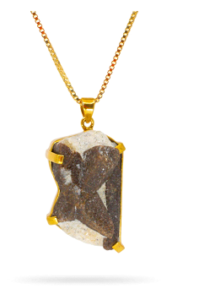
What Staurolite Is
Staurolite is a silicate mineral that is best known for forming natural crystal twins that intersect at angles such as 60° or 90°, creating crossshaped formations nicknamed “Fairy Cross,” “Fairy Stone,” or “Fairy Tears.”
⦁ Chemical type: Ironaluminium silicate (general formula ~Fe₂Al₉Si₄O₂₃(OH))
⦁ Colour: Reddishbrown, brownishblack, yellowbrown
⦁ Hardness: ~7–7.5 on the Mohs scale (similar to quartz).
⦁ Lustre: Vitreous (glassy) to resinous
⦁ Transparency: Opaque to rarely translucent
⦁ Crystal system: Monoclinic — commonly forms the distinctive twinned “cross” crystals.
The name “staurolite” comes from the Greek stauros (“cross”) and lithos (“stone”) because of the frequent crystal twinning that forms crosslike shapes.
📸 Pictures — Staurolite & Jewellery Use
Here are sample images you can look up to see both the raw/fairy cross crystals and jewellery examples (search these exact terms):
🔹 Natural Crystals
⦁ “staurolite fairy cross natural crystal” — shows classic crossshaped specimens used as cultural or spiritual keepsakes.
💍 Jewellery Examples
⦁ “staurolite pendant cross necklace” — staurolite twinned crystals mounted in metal.
⦁ “staurolite charm earrings” — wirewrapped crosses.
Typical jewellery pieces include pendants, charms, and sometimes earrings where the cross shape itself becomes the focal point of the design rather than a polished faceted gemstone.
📿 Jewellery & Cultural Uses
✔Fairy Cross Pendants: The natural crossed crystals are often used as pendants or charms in necklaces, celebrated as goodluck talismans.
✔Charms & Amulets: Because of folklore and spiritual associations, small cross stones are strung as charms or keychain pieces.
✔Wirewrapped Designs: Designers sometimes wire wrap the raw crystal crosses into earrings or bracelet charms.
Note: Staurolite isn’t typically faceted like transparent gemstones because most pieces are opaque and valued for their natural shape rather than optical brilliance.
💰 Price & Value
Staurolite is relatively affordable and collectible, with variations depending on quality and size:
🪩 Typical Price Ranges
⦁ Small raw/twinned cross pieces: ~$10–$30 USD (~₹800–₹2,400)
⦁ Larger notable crosses: ~$30–$60+ (~₹2,400–₹5,000)
⦁ Staurolite pendants/charms: Often ~$20–$100 depending on metal used and design.
Pricing can vary by country, seller, and how the stone is presented (raw vs. set in jewellery). Pieces with more distinctive or perfect crystal crosses tend to be more desirable

What Tiger’s Eye Is
Tiger’s Eye is a chatoyant gemstone from the quartz family, known for its rich goldenbrown and reddishbrown stripes that seem to move within the stone as light hits it. It forms when crocidolite (a fibrous mineral) alters into quartz but retains fibrous structures that reflect light.
Properties:
⦁ Composition: Silicon dioxide (quartz)
⦁ Hardness: ~6.5–7 on the Mohs scale — strong enough for most jewellery wear.
⦁ Luster: Silky to glassy
⦁ Transparency: Opaque to semitranslucent
⦁ Optical Effect:Chatoyancy (silky banded shimmer) — the “tiger’s eye” look.
Also found in blue (often called Hawk’s Eye), red, and green variants (some naturally occurring, some treated).
💍 Tiger’s Eye in Jewellery
Tiger’s Eye is popular in many jewellery types because its distinctive striped shimmer adds character and earthy warmth:
✔Rings — typically cabochon cut to highlight chatoyancy.
✔Pendants & Necklaces — often oval or freeform polished pieces.
✔Bracelets — bead strands or accent stones.
✔Earrings & Brooches — matching pairs or statement pieces.
Most jewellery uses polished cabochons or beads rather than faceted cuts, to best show the silky reflection.
💰 Price & Value — Loose & Jewellery
🪨 Loose Tiger’s Eye (Pakistan & Online)
Prices vary by size, weight (carat), and clarity of the stone:
Typical loose stone prices:
⦁ Cabochon stones (~10–20 ct): around ₨1,200–₨5,000+ depending on size.
⦁ Smaller culets (~5–16 ct) can cost ₨600–₨2,500+ online locally.
⦁ Larger highquality certified stones (20 ct+): ~₨2,000–₨8,500+ depending on size/quality.
This mirrors international pricing where average Tiger’s Eye rough or cut stones are affordable — often $0.10–$3 per carat for normal quality and higher for exceptional chatoyancy examples.
📿 Jewellery Prices (Approx)
(Local Pakistani marketplace / online typical ranges)
⦁ Simple Tiger’s Eye ring (stone only or silver setting): ~₨2,000–₨7,000+
⦁ Tiger’s Eye pendant (silver or mixed metal): ~₨2,000–₨8,000+
⦁ Beaded bracelets / necklaces: ~₨1,500–₨6,000+
What Unakite Is
Unakite is a colorful metamorphic rock made up of green epidote, pink orthoclase feldspar, and quartz — giving it a striking green and pink mottled appearance. Its name comes from the Unaka Mountains in North Carolina, USA, where it was first identified.

Key physical properties:
⦁ Types of minerals: Epidote (green), Orthoclase feldspar (pink), Quartz (clear/white)
⦁ Color: Combination of green and pink — pattern varies by piece.
⦁ Hardness: ~6–7 on Mohs — durable for many types of jewellery.
⦁ Texture: Opaque with a smooth, polished look when cut.
It’s not a true jasper despite often being called Unakite Jasper in markets; gemologists classify it as its own material.
💍 Unakite in Jewellery
Because of its distinctive green and pink pattern, Unakite is popular in a range of jewellery styles and forms:
✨ Common Forms Used
✔Beaded Bracelets & Necklaces — round or smooth polished beads.
✔Pendants & Cabochons — polished slices or shaped pieces set in metal.
✔Earrings & Rings — small polished Unakite stones set in silver or other metals.
✔Bead Strands / Mala Beads — popular in spiritual/meditation jewellery.
Jewellers often pair Unakite with silver or other gems to make stylish statement pieces that highlight the natural color contrast.
💰 Pricing & Market Value
💎 Loose Unakite Material
⦁ Beads & small polished stones: Typically $2–$10 USD each for standalone beads or cabochons on many online shops.
⦁ Bulk tumbled stones: Very affordable (a few dollars per piece) given its common availability.
Some general price guides list Unakite gemstone values from $10–$50 USD per carat for typical quality and possibly higher for exceptional patterned pieces.
📿 Finished Jewellery Examples (Online Retail Estimates)
(Based on common online listings in USD from retailers; PKR equivalents vary by import & local markup):
⦁ Unakite bead bracelet: ~$8–$15 USD (~₨1,600–₨3,200 PKR) for simple stretch designs.
⦁ Unakite earrings: ~$14–$16 USD (~₨3,000–₨3,500 PKR).
⦁ Unakite pendants: ~$20–$39 USD (~₨4,000–₨8,000 PKR).
⦁ Unakite rings: ~$30–$40+ USD (~₨6,000–₨8,000+ PKR).
What Vesuvianite (Idocrase) Is
Vesuvianite, also called idocrase, is a silicate mineral prized as a semiprecious gemstone. It was first found near Mount Vesuvius in Italy, which is where its name comes from.

Key Traits
⦁ Colour: Ranges from green (most common) to brown, yellow, blue and even rare purple.
⦁ Hardness: ~6.5 on Mohs scale — reasonably durable but needs gentle care.
⦁ Transparency: Translucent to transparent in gem quality.
⦁ Lustre: Glassy/Vitreous.
⦁ Crystal system: Tetragonal (in crystals) and often cut faceted or cabochon for jewellery.
Vesuvianite’s green colour sometimes resembles jade or peridot, and darker or more brilliant stones are especially sought after.
💍 Jewellery Uses
Vesuvianite is used in a variety of jewellery styles, often set to highlight its natural colour:
✨ Pendants & Necklaces — polished cabochon or rough crystal forms.
✨ Rings — both faceted and cabochon stones.
✨ Earrings & Studs — small matching pieces.
✨ Beaded Bracelets/Necklaces — rod or rondelle beads.
Because of its hardness, it’s better suited to earrings, pendants and occasional rings rather than heavy everyday wear
💰 Price Guide (Loose & Jewellery)
🔹 Loose Vesuvianite Stones
Prices vary widely by size, quality, colour and cut:
⦁ Cabochon beads / smaller stones: ~$5–$30 per carat (more affordable).
⦁ Medium faceted stones (5–12 ct): ~$100–$260+ (green varieties).
⦁ Larger or highquality transparent stones (10 ct+): ~$150–$300+ or more depending on colour intensity and clarity.
Example loose gemstone: ~11.20 ct green vesuvianite cushion cut around $116–$155 USD online.
📿 Finished Jewellery
(Prices vary by metal, design and retailer)
⦁ Simple Vesuvianite pendants/earrings: typically around $30–$150+ USD depending on setting (silver, gold plated, handmade).
⦁ Designer or larger gemstone rings/pendants: can reach $150–$300+ USD or more.
Rough or polished raw crystal pendants can also be valued as collector pieces or unique artisan jewellery.
What Wulfenite Is

Wulfenite is a lead molybdate mineral (PbMoO₄) best known for its bright orange, yellow, and red tabular crystals. It’s prized by mineral collectors for its brilliant colour and geometric shapes, forming thin platelike or pyramid/bricklike crystals.
Key physical properties
⦁ Chemical formula: PbMoO₄ (lead molybdate)
⦁ Colour: Orange, yellow, red, brown, can be green or grey rarely
⦁ Hardness: ~2.5–3 on Mohs scale — soft and brittle (fragile)
⦁ Transparency: Transparent to translucent in good crystals
⦁ Lustre: Adamantine (like diamond shine) to resinous
⦁ Crystal system: Tetragonal — often rectangular or platy shapes
✔ Because of lead content and softness, wulfenite isn’t widely used in everyday jewellery — it’s mainly a collector’s mineral and display gem.
📸 What Wulfenite Looks Like
Search examples like:
⦁ “wulfenite crystals orange”
⦁ “wulfenite yellow tabular crystals”
⦁ “red wulfenite specimen”
Typical images show brilliant orange or golden tabular crystals on matrix rock, often displayed in mineral collections.
💍 Jewellery Use
👉 Is it used in jewellery?
Not commonly, because:
⦁ It’s very soft and brittle, so it scratches and chips easily.
⦁ Even good crystals are usually thin plates — hard to cut into traditional gem shapes.
That said, very rare faceted wulfenite gems do exist — collectors sometimes set small stones into pendants, earrings, or museumquality pieces to showcase the colours.
💎 Tip: If you see wulfenite jewellery, it’s usually *delicate, custom designed, and more ornamental than wearable daily.
💰 Value & Pricing
Wulfenite’s value depends on colour, clarity, and crystal form.
📈 Collector Specimens
